
Large Format Scanning Near You
Over 100 Five-star Reviews • 20+ Years of Experience • Serving the San Francisco Bay Area, California
Turn oversized physical documents into high-resolution, searchable, and organized digital records with eRecordsUSA’s professional large-format scanning services.
Our commercial-grade wide-format scanning equipment accommodates documents up to 56 inches wide, with project-specific capture settings, including 300–600 DPI resolution, color, grayscale, and black-and-white scanning.
We evaluate each collection according to its size, physical condition, scanning requirements, intended use, and required delivery format. This helps us to select an appropriate capture method, preserve important visual details, and organize the finished files for practical use.
Whether you need to digitize a few oversized drawings or manage a large institutional scanning project, our team can help you plan the process, arrange collection or drop-off, and receive organized digital deliverables.










Ensures Higher Accuracy & Long-term Usability
Generic scanning fails when accuracy, scale, or clarity matter most. eRecordsUSA’s custom approach to professional large-format digitization means each blueprint, engineering plan, or historical drawing is treated as a mission-critical asset with exact metadata, file naming, and resolution tailored to your needs. No “one-size-fits-all” – just precision and project-specific results.


eRecordsUSA – Trusted Choice for Large Format Digitization
Preserve Critical Details
Our high-resolution scanning captures fine linework, legends, annotations, title blocks, and revision details in architectural plans and engineering drawings, maintaining clarity for technical reference and future use.
Simplify Document Access
Convert bulky paper collections into organized digital files with consistent naming, metadata indexing, and OCR-assisted search, making drawings easier to retrieve, share, and access across teams.
Protect Valuable Originals
Reduce physical storage needs and repeated handling of fragile documents through careful preparation and appropriate scanning methods, supporting long-term preservation while retaining originals when required.
Streamline Bulk Digitization
Manage large document collections efficiently through structured scanning batches, standardized file naming, quality checks, and secure delivery, ensuring consistent organization across departments and projects.
Our Secure 7-Step Scanning Workflow
How Does Our Large Format Scanning Process Work?
Every collection has different technical and handling requirements. We review your documents before scanning and organize the project around the type of originals, required output, indexing needs, and intended use.
1. Free Consultation & Collection Assessment

2. Local Pickup or Drop-Off

3. Document Inspection & Preparation

4. High-Resolution Large Format Scanning
5. OCR, File Naming & Metadata Indexing
7. Secure Digital Delivery and Original Document Disposition
6. Image Review and Quality Assurance
From Fortune 500 Companies to libraries to the public sector
Who Can Benefit From Our Large Format Scanning Services?
From technology leaders to government agencies, eRecordsUSA is the scanning partner for organizations requiring high-resolution, secure, and scalable digitization of oversized materials.

Audience Segments We Serve
- Government & Public Sector — Infrastructure Records, Permits & Historical Files
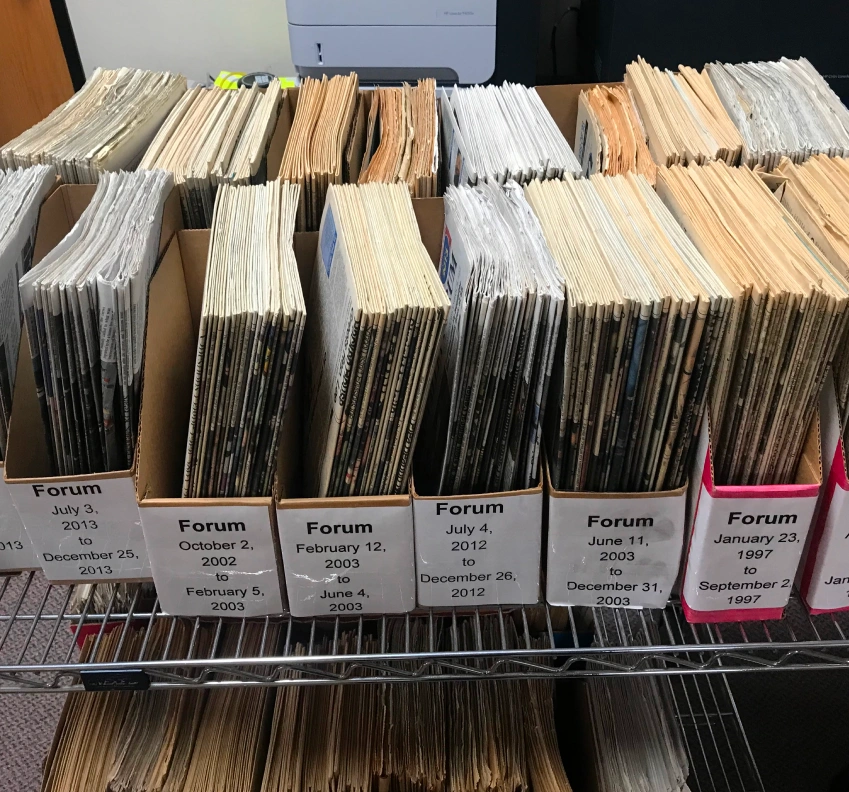
Clients We Serve: City of Santa Clara, National Park Service, County of San Mateo, State of California, CFTC, Department of Industrial Relations, Golden Gate Bridge Archives - Libraries & Cultural Archives — Newspapers, Rare Books & Ephemera
Clients We Serve: Alameda County Public Library, Redwood City Library, California State Library Archives - Educational Institutions — Manuscripts, Academic Records & Campus Archives
Clients We Serve: San Jose State University, Stanford University - Conservation & Environmental Groups — Research Archives & Project Documentation
Clients We Serve: Tompkins Conservation Archive - Museums — Rare Books, Photos, Blueprints & Ephemeral Collections
Clients We Serve: Computer History Museum, The Foster Museum, Rosicrucian Egyptian Museum, Campbell Historical Museum, The Company of Military Historians, Southern Pacific Railroad History Center
All Oversized Documents We Scan & Digitize
What Types of Large Format Documents Can We Scan and Digitize?
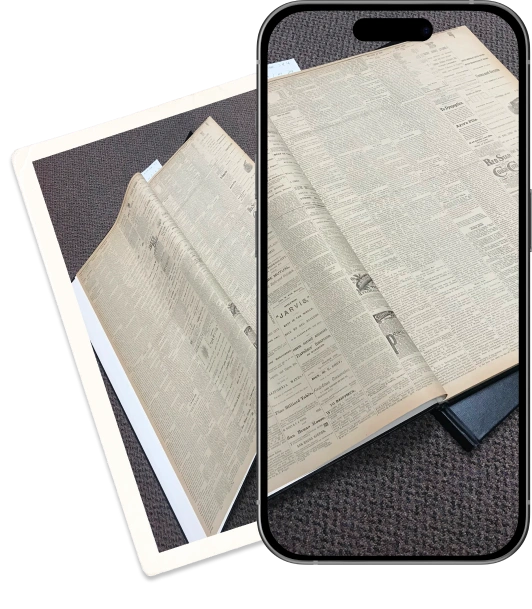
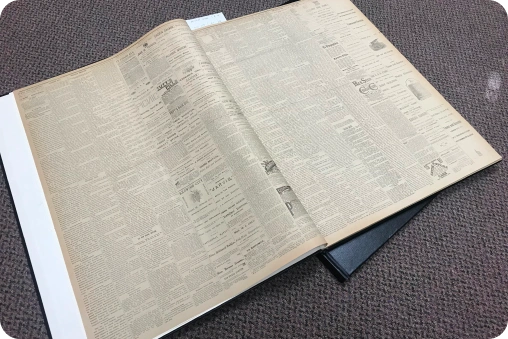
From standard-size engineering plans to unusually long maps and delicate historical originals, our scanning services accommodate a broad range of oversized documents, subject to equipment compatibility and document condition.




End-to-End Digitization Solutions for Unique Large Format Collections
Why Choose eRecordsUSA for Large Format Scanning and Digitization?
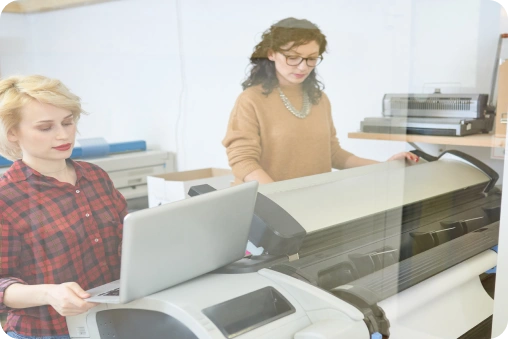
With over 20 years of digitization experience, eRecordsUSA supports government agencies, engineering firms, public utilities, and enterprises handling sensitive and oversized records. Our Fremont-based operations combine controlled document handling, organized digital delivery, and project-specific security requirements to help institutions digitize valuable collections with confidence.
Verified Secure Handling from Start to Finish
We prioritize document security, accountability, and confidentiality throughout the digitization process.
- Controlled Access: Physical records are handled by background-verified personnel within our Fremont scanning facility.
- In-House Processing: Scanning is performed locally without outsourcing document processing to third-party facilities.
- Secure Collection: Coordinated pickup across the San Francisco Bay Area, including San Jose, Oakland, Sunnyvale, and Walnut Creek.
- Confidentiality Protection: NDA options, security agreements, and project-specific handling arrangements for sensitive records, including Controlled Unclassified Information (CUI) where applicable.
Structured Digital Archives for Institutional Use
We help organizations transform fragmented physical collections into consistently organized digital archives that support departmental workflows and records retrieval.
- Custom File Organization: Naming conventions based on drawing numbers, project identifiers, document categories, and revision information.
- Department-Level Structure: Logical folder hierarchies aligned with institutional records management and internal access requirements.
- System Compatibility: Digital deliverables organized for use with existing archives, document management systems, Google Drive, Dropbox, and other supported storage platforms.
- Controlled File Delivery: Structured digital handoff with agreed naming, folder arrangements, and transfer requirements.
Preservation-Focused Scanning for Valuable Collections
Institutional archives often contain irreplaceable architectural plans, historical maps, engineering records, and other oversized materials that require careful preservation planning.
- Collection Assessment: Review of document age, physical condition, storage arrangements, and handling requirements before digitization.
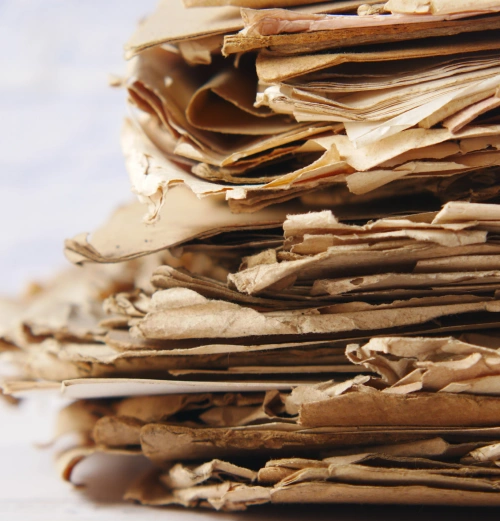
- Protective Preservation: Appropriate preparation and handling procedures for fragile, rolled, folded, or deteriorating originals.
- Long-Term Accessibility: Archival-oriented digital deliverables that support records retention, future reference, and preservation workflows.
- Original Document Control: Return, retention, or authorized secure destruction according to applicable records policies and project instructions.

Government-Recognized Expertise & Institutional Trust
Our experience with public-sector and enterprise collections supports projects requiring careful coordination, confidentiality, and consistent quality assurance.
- Business Recognition: eRecordsUSA reports small-business, women- and minority-owned business recognition, including SBA 8(a) participation, subject to current certification verification.
- Institutional Experience: Scanning support for government agencies, engineering organizations, public utilities, libraries, and corporate records teams.
- Proven Capabilities: More than 20 years of experience digitizing construction plans, infrastructure records, engineering drawings, and historical collections.
- Project-Specific Compliance: Security controls, confidentiality agreements, retention requirements, and applicable standards reviewed according to each project’s needs.
- Quality Accountability: Documented project requirements and image review procedures help maintain consistency throughout the digitization process.

Large Format Scanning & Digitization FAQs
How long does professional large-format scanning take?
Large-format scanning turnaround depends on collection size, document condition, preparation, resolution, indexing, and quality checks. Large institutional collections may require phased processing and scheduled digital delivery.
Can large-format scanning handle irregularly shaped or unusually long documents?
Yes, subject to equipment limitations. Long maps, oversized artwork, engineering plans, and irregular originals may require specialized capture methods, multiple scans, or digital stitching based on their dimensions and condition.
Can large-format scans be reproduced at their original dimensions?
Yes, large-format digital images can support full-size reproduction when capture dimensions, image resolution, and print scaling are correctly maintained. Original dimensions and scale references should be verified before technical use.
Can large-format scanning projects accommodate multiple locations and departments?
Large-format digitization projects can be organized by facility, department, document category, or priority. Coordinated collection, batch processing, and phased delivery help institutions manage distributed records without disrupting operations.
How is completeness verified during bulk large-format digitization?
Bulk scanning completeness can be checked by reconciling the source document inventory with digital deliverables. Sheet counts, filenames, document identifiers, and quality-control checks help identify missing, duplicated, or incorrectly organized records.
Certified scanning, purpose-built for wide-format records
National Standards, Local Oversized Expertise
At eRecordsUSA, we support large-scale, multi-phase digitization projects for government agencies, engineering firms, public utilities, and institutional archives. Whether managing historical infrastructure plans, oversized technical records, or departmental collections, we establish project-specific specifications, deliverables, and quality requirements before scanning begins.
For delicate, aging, or irregularly shaped originals, we evaluate document condition and handling limitations before determining an appropriate preservation approach. Specialized document carriers, overhead imaging equipment, and controlled preparation techniques help accommodate vulnerable materials while minimizing unnecessary physical stress.
Our team coordinates complex digitization projects around institutional timelines, departmental priorities, and operational requirements. From multi-location collection planning to phased processing, progress tracking, and organized deliverables, we help institutions maintain project visibility and continuity throughout the conversion.
Partner with a local scanning team equipped to manage complex oversized collections with accountability, technical precision, and consistent project coordination.
All scanning projects are processed in-house at our Fremont, California, facility, with project requirements established through documented workflows and quality review procedures. Where applicable, we assess digitization specifications against relevant FADGI or NARA guidance and address confidentiality, retention, and information-security requirements according to the agreed project scope.
Large Format Scanning Sizes, Equipment & Resolution
What Document Sizes Can Large Format Scanners Handle?
Professional large-format scanning accommodates oversized materials, including architectural plans, engineering drawings, topographic maps, posters, artwork, panoramic photographs, historical records, and technical schematics.
These documents commonly follow ANSI, ARCH, and ISO paper-size standards, although custom-sized originals and continuous-roll materials may require specialized handling.
At eRecordsUSA, our commercial-grade wide-format scanning equipment supports suitable documents up to 56 inches wide. Maximum scanning length depends on document thickness, physical condition, orientation, and the selected capture method.
|
Paper Format |
Dimensions (Inches) |
Dimensions (Millimeters) |
|
ANSI C |
17 × 22 |
432 × 559 |
|
ANSI D |
22 × 34 |
559 × 864 |
|
ANSI E |
34 × 44 |
864 × 1118 |
|
ARCH C |
18 × 24 |
457 × 610 |
|
ARCH D |
24 × 36 |
610 × 914 |
|
ARCH E |
36 × 48 |
914 × 1219 |
|
ISO A1 |
23.4 × 33.1 |
594 × 841 |
|
ISO A0 |
33.1 × 46.8 |
841 × 1189 |
These are standard sheet dimensions; actual scanning compatibility also depends on the material’s condition, surface characteristics, and equipment limitations.
For unusually long maps, oversized artwork, panoramic photographs, or irregularly shaped archival documents, share approximate dimensions and representative photographs so our team can assess suitable capture options.
Which Large Format Scanning Method Is Best for Your Documents?
The most suitable scanning method depends on the original document’s size, material, fragility, surface texture, and required image quality. Professional large-format digitization uses different capture technologies to accommodate oversized originals while minimizing handling risks.
|
Scanning Method |
Best-Suited Materials |
Technical Considerations |
|
Roll-Fed / Sheet-Fed Scanning |
Architectural plans, engineering drawings, technical schematics, unbound maps, and other suitable large sheets |
Efficient for compatible documents; fragile, torn, or heavily creased originals may require alternative handling. |
|
Flatbed Scanning |
Oversized photographs, artwork, delicate prints, flat historical records, and sensitive materials |
Supports originals on a flat scanning surface; maximum dimensions depend on equipment capacity. |
|
Overhead / Planetary Imaging |
Fragile archives, bound collections, historical maps, textured artwork, and irregular originals |
Captures materials without feeding them through rollers; requires controlled positioning, illumination, and image alignment. |
Wide-format scanners may use Contact Image Sensor (CIS) or Charge-Coupled Device (CCD) technology, while overhead systems use specialized cameras or scan bars. Equipment selection depends on the original’s characteristics and the intended digital output.
For materials larger than a single capture area, multi-part imaging and digital stitching may be considered where appropriate. This process combines overlapping scans into one digital image, with alignment and continuity checks to minimize visible seams or missing details.
What Resolution Is Best for Large Format Scanning?
Large-format scanning resolution is measured in dots per inch (DPI) and determines how much spatial detail is captured from the physical original.
Choosing the appropriate resolution depends on document type, fine-detail requirements, original condition, intended reproduction size, and digital storage needs.
|
Resolution |
Capture Characteristics |
Common Applications |
|
300 DPI |
Balanced image detail and manageable file size |
General oversized document archiving, maps, technical records, and reference materials |
|
400 DPI |
Additional sampling detail for moderately fine content |
Annotated diagrams, detailed drawings, and institutional records |
|
600 DPI |
Higher sampling detail with larger digital files |
Fine-line engineering schematics, historical illustrations, detailed artwork, and small annotations |
Higher DPI can reproduce more detail present in an original but cannot restore information lost through fading, physical deterioration, or poor source quality.
At eRecordsUSA, we evaluate the original material and intended digital use before recommending suitable resolution settings for viewing, reproduction, technical reference, or archival preservation.
Which Color Mode Should You Choose for Large Format Scanning?
The appropriate color mode depends on the information contained in the original and how the digital files will be used.
- Color Scanning: Preserves colored annotations, highlighted routes, illustrations, artwork, marked-up plans, and other materials where color communicates important information.
- Grayscale Scanning: Captures tonal variations, pencil marks, shading, and subtle contrasts in monochrome historical records, photographs, and technical documents.
- Black-and-White (Bi-Tonal) Scanning: Produces compact digital files for suitable high-contrast originals but may lose faint markings, subtle shading, or deteriorated details.
Selecting the correct mode helps balance image fidelity, document readability, file size, and long-term usability without unnecessarily increasing digital storage requirements.
Digitize, Organize, Search & Access
Digital File Formats, OCR & Searchable Large Format Archives
Which Digital File Format Is Best for Large Format Scanning?
Professional large-format scanning produces digital files for different purposes, including document viewing, image reproduction, technical reference, searchable access, and long-term preservation.
The appropriate output format depends on the original material, required image quality, software compatibility, and intended use.
|
File Format |
Primary Application |
Key Characteristics |
|
|
Document viewing, sharing, and distribution |
Supports single- or multipage digital records; may contain image-only or searchable content. |
|
Searchable PDF |
Text-based retrieval and document access |
Combines scanned images with an OCR-generated text layer for keyword searching. |
|
PDF/A |
Long-term electronic document preservation |
Archival-oriented PDF format designed to support consistent future rendering. |
|
TIFF |
High-resolution image capture and archival master files |
Supports lossless image storage for preservation-focused workflows. |
|
JPEG |
Digital image viewing, distribution, and convenient sharing |
Uses image compression to reduce file size; repeated lossy saving may affect quality. |
|
DWG / DXF |
Editable technical drawing workflows |
Requires separate raster-to-vector or CAD conversion; conventional image scanning does not automatically produce editable geometry. |
For institutional archives, separate preservation master files and access copies may be appropriate. High-quality masters retain captured image information, while access copies support convenient viewing, retrieval, and everyday distribution.
The selected file format should reflect the document’s intended lifecycle, from initial digitization to long-term storage and future accessibility.
OCR & Metadata Indexing for Searchable Large Format Documents
Large-format scanning creates digital images of oversized physical materials. Optical Character Recognition (OCR) and metadata indexing add retrieval capabilities that make extensive digital collections easier to search, identify, and organize.
OCR identifies recognizable text within scanned documents, including titles, labels, reference numbers, printed annotations, and certain document identifiers.
Metadata indexing associates digital records with structured information such as:
- Document identification: Title, category, collection name, or reference number.
- Project organization: Project name, department, facility, or archive identifier.
- Technical references: Drawing numbers, map identifiers, sheet numbers, or revision details.
- Record information: Document date, version, classification, or custom indexing fields.
- Digital organization: Consistent filenames, folder hierarchies, and searchable metadata.
OCR accuracy varies according to text size, handwriting, contrast, image resolution, background complexity, and the physical condition of the original. Structured metadata can support more reliable retrieval where text recognition is incomplete.
By combining image capture, OCR, and metadata indexing, organizations can locate relevant digital records through document names, reference identifiers, and searchable text instead of manually reviewing individual files.
Digital Delivery & Archive Integration for Oversized Documents
Digitized large-format collections can be organized for use within existing Document Management Systems (DMS), Enterprise Content Management (ECM) environments, cloud storage platforms, and institutional digital archives.
Depending on project requirements, digital deliverables may include:
- Organized folders with consistent file naming conventions.
- Searchable PDFs and high-resolution image files.
- Metadata spreadsheets or structured indexing information.
- Preservation-oriented master files and accessible working copies.
- Files prepared for secure transfer or approved storage environments.
Digital records can be prepared for customer-managed platforms such as Google Drive, Dropbox, internal network repositories, or other approved systems, subject to compatibility and project requirements.
Customized metadata mapping, automated imports, or direct software integration should be evaluated separately where necessary.
Our goal is to deliver well-organized digital collections that support document retrieval, internal collaboration, records management, and long-term accessibility.
Explore Our Digital Archiving Services
How Much Does Large Format Scanning Cost?
Large format scanning is typically quoted according to the documents’ characteristics and the work required to digitize them.
The cost of scanning a few flat architectural drawings may differ substantially from scanning thousands of folded, fragile, or irregularly sized plans requiring preparation, indexing, and quality review.
What Factors Affect Large Format Scanning Prices?
|
Pricing Factor |
How It Influences Project Scope |
|
Document quantity |
More sheets increase capture, processing, and verification requirements. |
|
Sheet dimensions |
Larger or irregular originals may require different equipment or handling. |
|
Physical condition |
Fragile, folded, rolled or torn materials may require additional preparation. |
|
Scanning resolution |
Higher-resolution capture can increase image processing and storage requirements. |
|
Color requirements |
Color and tonal detail may influence scanning and quality-control specifications. |
|
OCR and metadata |
Searchable output and structured indexing add processing requirements. |
|
File formats and delivery |
Multiple deliverable versions, storage media and transfer requirements affect scope. |
|
Pickup and logistics |
Collection location, packaging, transportation and custody requirements may affect service arrangements. |
|
Project deadlines |
Expedited or phased schedules may require separate planning. |
Larger projects can create opportunities for efficient batch preparation and repeatable scanning workflows, especially where documents share similar sizes, conditions, and output requirements.
However, volume alone does not determine the final price. A large archive containing mixed sizes, fragile originals, and extensive indexing requirements may require more work per document than a uniform collection.
For an accurate quotation, provide approximate sheet quantities, dimensions, storage information, condition photographs, required outputs, and your deadline.
Request a Customized Large Format Scanning Quote
Help Us Understand Your Collection Before We Recommend a Scanning Solution
Tell Us About Your Large Format Scanning Project
To recommend an appropriate digitization approach, we need information about your collection’s volume, physical condition, location, storage arrangements, and intended purpose.
Whether you have architectural blueprints, engineering drawings, oversized maps, historical plans, or a large institutional archive, the following questions will help us understand your requirements and prepare meaningful recommendations.
1. Where Is Your Large Format Document Collection Located?
Please tell us where your documents are currently located.
Can you ship the collection, arrange a pickup, or drop it off at our Fremont, California, scanning facility?
If your collection is located in the San Francisco Bay Area, please provide your city and any special transportation, scheduling, or document-security requirements.
2. How is Your Oversized Document Collection Currently Stored?
Are your documents stored in boxes, on shelves, in flat-file cabinets, drawers, drawing tubes, binders, or other storage systems?
Can you share photographs of the current storage arrangement so we can understand the types of media, their organization, and the preparation that may be needed?
3. What are your Scanning Requirements and Project Goals?
Please describe how you intend to use the digital files and what scanning specifications you require.
For example:
- File formats: PDF, searchable PDF, PDF/A, TIFF, JPEG, or editable CAD conversion.
- File naming: Project name, sheet number, drawing title, version, or custom naming.
- Resolution: 300 DPI, 600 DPI, or a specific capture requirement.
- Color mode: Color, grayscale, or black and white.
- Metadata and indexing: OCR, drawing number, revision, date, document type, or other searchable fields.
- Project purpose: Digital preservation, engineering reference, document sharing, operational records management, or long-term archiving.
If you are unsure which specifications are appropriate, we can discuss options based on your intended use.
4. What Types of Large Format Documents Do You Have & What is their Condition?
Please provide representative photographs of the collection, including documents in their current storage condition and examples opened, unrolled, or unfolded where safe to do so.
Photographs can help us understand:
- The types of documents in the collection.
- Their approximate dimensions and formats.
- Whether they are flat, rolled, folded, mounted, or bound.
- The condition of the paper, including tears, creases, fading, brittleness, or stains.
- Any unusual surface materials, attachments, or handling requirements.
For fragile or valuable originals, do not unfold or manipulate them solely to take photographs if doing so could cause damage.
5. What is the Estimated Volume of Your Collection?
Understanding collection size and condition is essential for determining the project scope.
Please provide any available details, such as:
- Number and type of boxes, drawers, tubes, cabinets, or storage units.
- Approximate number of blueprints, maps, plans, or individual sheets.
- Largest and most common document dimensions.
- Approximate number of folded, rolled, flat, or bound items.
- Number of drawing sets, where applicable.
- Estimated total scanning volume.
- Any priority records, project deadlines, or phased delivery requirements.
Exact counts are not necessary for an initial discussion. Reasonable estimates and representative photographs are helpful starting points.
Get a Free Quote | Schedule a Consultation | Call 510-900-8800
END-TO-END DIGITIZATION SOLUTIONS FOR UNIQUE LARGE FORMAT COLLECTIONS
Top Scanning & Conversion Services
⭐ What Our Clients Are Saying: Real Results, Real Reliability
Rated 5 Starts For Our Document and Book Scanning Services
At eRecordsUSA, clients across libraries, museums, archives, academic institutions, and government agencies trust us with their most fragile and valuable collections. We don’t just scan—we preserve history. From non-contact scanning to metadata-rich indexing, we deliver digital archives that are as accurate as they are accessible.


Want to See How We Compare? Let us quote your next digitization project and show you why we’re trusted by leading institutions nationwide.