
eRecordsUSA provides professional handwritten journal scanning and digitization services to convert personal diaries, bound notebooks, scientific research logs, historical manuscripts, and institutional archives into high-resolution digital files.
With over 20 years of document digitization experience, we use non-destructive flatbed and cradle-supported scanning equipment to capture fragile, aging, and tightly bound journal pages without removing their original bindings.
Our scanning process supports resolutions up to 600 DPI, along with Optical Character Recognition (OCR) and metadata indexing to transform handwritten records into organized, searchable digital archives.
We deliver digitized journals in formats such as searchable PDF and archival TIFF, with secure delivery options including cloud transfer and USB drives.
Whether you need to preserve family diaries, digitize laboratory notebooks, protect historical records, or improve access to institutional collections, eRecordsUSA offers customized scanning solutions with careful document handling, quality-control reviews, and secure processing.
Based in Fremont, California, we serve customers throughout the San Francisco Bay Area and across the United States through local pickup and shipping arrangements.










Turning Handwritten Journals into Digital Entries
Trusted Journal Digitization by Experts in Preservation
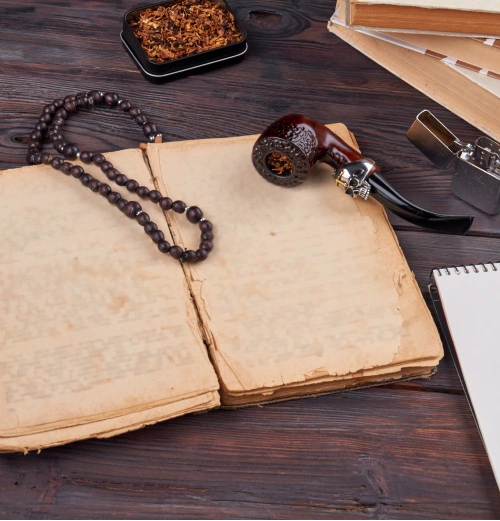
Every handwritten journal has unique preservation requirements, from fragile paper and faded ink to tight bindings, loose inserts, and handwritten annotations. eRecordsUSA evaluates these physical characteristics before digitization to determine suitable handling methods, image capture settings, and file organization requirements. This careful approach helps maintain the journal’s original page order, visual details & historical context throughout the digitization process.


Your Journals. Digitized. Searchable. Preserved Forever
Journal Condition & Binding Assessment
We examine page fragility, binding structure, loose inserts, and physical deterioration before scanning. This helps our team select appropriate handling methods for delicate or irregularly bound journals.
Image Clarity & Page Enhancement
Our image-processing workflow addresses page alignment, cropping, and visual clarity where appropriate. Quality checks help ensure handwritten notes, illustrations, and page details remain legible in the digital copies.
Structured Metadata & Page Indexing
We organize digital journal collections using descriptive metadata, sequential page labels, and customized folder structures. Information such as journal titles, dates, and volume identifiers supports efficient navigation and retrieval.
Document Security & Chain of Custody
We follow documented handling procedures from journal intake through digital delivery. Project-specific security requirements and custody records help institutions manage confidential or irreplaceable journal collections.
Step-by-Step Workflow
How Does eRecordsUSA’s Handwritten Journal Scanning Process Work?
Our handwritten journal digitization process follows eight structured steps, from project consultation and secure collection to scanning, text recognition, quality verification, and digital delivery. Each stage addresses the journal’s physical condition, indexing requirements, and intended use to produce accurate, organized digital records.

1. Consultation & Project Assessment

2. Secure Pickup or Drop-Off

3. Document Preparation

4. High-Resolution Page Capture

5. OCR & Image Processing
6. Quality Control & Page Verification
7. Metadata Tagging & File Organization
8. Secure Delivery & Project Completion
Your Paper Notes, Now Searchable
Which Industries Benefit from Handwritten Journal Digitization?
Handwritten journal digitization supports universities, research laboratories, historical archives, healthcare organizations, legal professionals, and private collectors that rely on handwritten records for documentation, research, and reference. Each sector has distinct requirements for organizing, accessing, and preserving journal information, from scientific observations and historical manuscripts to confidential institutional records.

Academic & Research Institutions
Universities, scientific laboratories, and research institutions digitize handwritten laboratory notebooks, experimental records, thesis journals, and field research logs to support academic research, data verification, and knowledge sharing. Organized digital collections help researchers locate historical observations, reference previous experiments, and maintain continuity across long-term research projects.
Medical, Legal & Government Organizations
Healthcare organizations, legal departments, and government agencies use journal digitization to manage handwritten medical logbooks, administrative registers, legal notes, and historical operational records. Digital access supports authorized information retrieval, institutional recordkeeping, and documentation workflows while accommodating applicable confidentiality and retention requirements.
Libraries, Archives & Historical Societies
Libraries (California State Library Archives digitization), museums like Campbell Museum Archives, historical societies, and archival institutions digitize manuscripts (Beethoven Manuscripts for SJSU’s Ira F. Brilliant Center), historical diaries, accession registers, and heritage collections to support historical research and public access. Digital collections allow archivists to organize records by date, author, collection, or subject while reducing repeated handling of valuable originals.
Private Researchers & Collectors
Genealogists, family historians, authors, and private collectors digitize personal diaries, ancestral journals, travel notebooks, and handwritten memoirs to document family histories and preserve firsthand accounts. Organized digital copies make it easier to revisit historical entries, share family records, and reference original handwritten material for research or publication.
Journal scanning service near me
How Much Does It Cost to Digitize Handwritten Journals?
Project pricing depends on collection size, journal condition, desired digital outputs, and indexing requirements.





Handwritten Journals Digitization Service
What Makes eRecordsUSA Different for Handwritten Journal Digitization?
With over 20 years of experience, eRecordsUSA brings together archival-quality scanning, secure in-house processing, customized digital organization, and highly rated customer service. From personal family journals to large institutional collections, we focus on delivering accurate, accessible, and well-organized digital records that meet each customer’s needs.
Archival-Quality Scanning That Meets Recognized Standards
Your handwritten journals deserve more than ordinary document scanning. Our preservation-focused imaging follows recognized FADGI, ISO-certified, and NARA guidance to help maintain the clarity, color, and original details of valuable records.
- Recognized Imaging Benchmarks – Scanning practices guided by FADGI, ISO, and NARA requirements.
- Careful Image Quality Checks – Attention to sharpness, color accuracy, and fine handwritten details.
- Experience With Valuable Collections – Projects involving historical archives, rare books, and institutional records.

Searchable, Accessible & Well-Organized Digital Journals
We create digital collections designed around how you plan to use them, whether that’s finding a specific entry, sharing family history, or organizing thousands of pages in a research archive.
- Searchable & Accessible PDFs – OCR-based text search, with accessibility features available according to project requirements.
- Custom Indexing & Bookmarks – Organize content by author, date, volume, chapter, title, or theme.
- Archive-Ready File Delivery – Custom file names, folder structures, and metadata packages for digital libraries and document management systems.
Secure In-House Scanning at Our Fremont Facility
Your journals stay under our team’s direct care throughout processing. Our Fremont, California facility supports secure, in-house digitization, giving customers greater confidence when submitting confidential research records, historical manuscripts, or irreplaceable family collections.
- No Third-Party Scanning Outsourcing – Digitization work is handled by our team at our Fremont facility.
- Controlled Document Access – Restricted processing areas and documented material-handling procedures.
- Secure Facility Practices – Staff oversight, monitored work areas, and protected document storage.


Highly Rated, Experienced & Customer-Focused
Our reputation is built on years of digitization work and positive customer experiences. We serve individuals, researchers, libraries, museums, government organizations, and businesses with different collection sizes and project requirements.
- 5-Star Customer Feedback – Highly rated reviews from customers on Google and Yelp.
- 20+ Years of Experience – Serving personal collections, institutional archives, and businesses, including Fortune 500 companies.
- Inclusive, Multilingual Support – A minority- and woman-owned business offering customer communication in English, Hindi, Punjabi, Spanish, and Mandarin.

Can handwritten journals in languages other than English be digitized?
Yes. Journals written in languages such as Farsi, Spanish, or French can be scanned into digital images. Converting their handwriting into searchable text depends on language support, writing style, and recognition accuracy.
Can journals containing sketches, photographs, and fold-out pages be digitized?
Journals containing drawings, photographs, annotations, or fold-out pages can be assessed for specialized scanning. Page size, binding condition, and attached materials determine the appropriate capture method.
Can I digitize selected pages instead of an entire handwritten journal?
Selected-page digitization may be possible depending on the journal’s binding, page accessibility, and project requirements. Provide the relevant page numbers or sections when requesting a quote to confirm the available options.
Can I request sample scans before digitizing my entire journal collection?
Sample scanning may be available for projects requiring image-quality evaluation. Ask eRecordsUSA whether representative pages can be scanned for review before proceeding with the complete collection.
How should I prepare handwritten journals with loose pages or inserts for scanning?
Keep loose pages and inserts in their original order. Avoid removing bindings, flattening fragile sheets, or making repairs yourself. Inform the scanning team about detached pages, unusual materials, and existing damage before submission.
Why Choose eRecordsUSA?
Trusted Experts in Handwritten Journal Scanning & Digitization
Your handwritten journals may hold years of personal memories, valuable research, or irreplaceable historical information. At eRecordsUSA, we understand how important these records are. With over 20 years of digitization experience, we help individuals, families, researchers, and organizations preserve their journals with professional care and attention to detail.
Our commitment to quality and security is supported by ISO 9001:2015 and ISO/IEC 27001:2022 certifications. These internationally recognized standards reflect our focus on consistent service quality, responsible information handling, and protecting the documents and information customers entrust to us.
Whether you have a treasured family diary, a handwritten research notebook, or an entire collection of historical journals, eRecordsUSA makes the digitization experience straightforward and dependable. From your first consultation to receiving your digital files, our team focuses on clear communication, careful handling, and results you can trust.
How Long Does It Take to Digitize Handwritten Journals?
Timelines vary by collection size, material condition, and requested digital processing.
- Collection Size & Page Volume
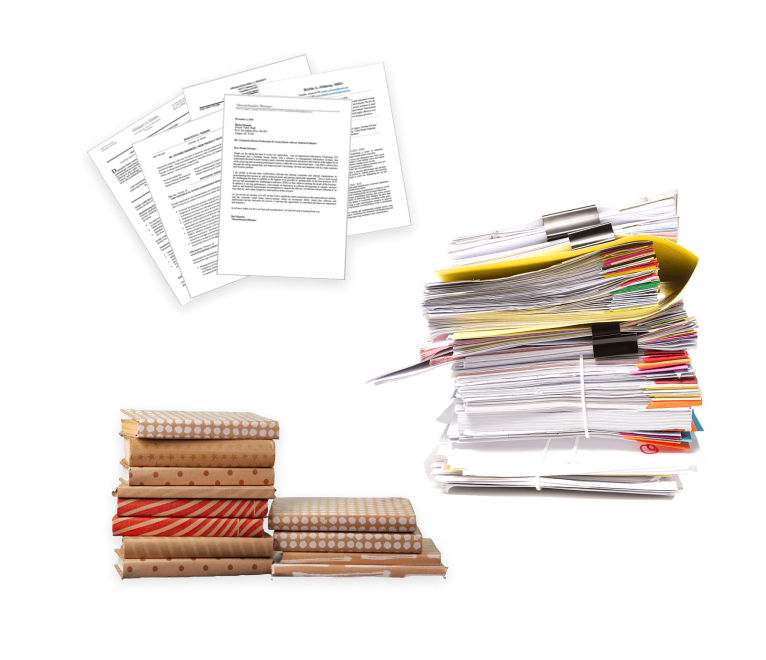
Individual journals and small notebook collections generally require less processing time than projects involving hundreds of bound volumes or thousands of handwritten pages.
- Binding Complexity & Document Condition
Tightly bound journals, oversized pages, fragile paper, and deteriorated manuscripts may require slower page handling, specialized preparation, or additional inspection.
- Handwriting Recognition & Text Verification
Projects requiring searchable text, recognition of complex handwriting, or manual transcription verification may take longer than image-only scanning projects.
- Indexing & Final Deliverable Requirements
Detailed metadata, custom file naming, page-level indexing, and multiple output formats can add processing and quality-review time before final delivery.
Contact eRecordsUSA with your approximate journal count, page volume, document condition, and desired digital outputs to discuss a project-specific completion schedule.
Request a Project Timeline
DIGITAL JOURNAL FILE FORMATS
Which Digital File Format is Best for Handwritten Journals?
The best file format for digitized handwritten journals depends on whether you need to preserve original page details, search handwritten entries, edit transcribed text, or manage an institutional archive.
- Searchable PDF – For Research & Easy Retrieval – Searchable PDFs combine scanned journal pages with a text layer generated through OCR or handwriting recognition. They allow users to search recognized names, dates, and journal entries while retaining the original page images. Search accuracy depends on the quality of the recognized text.
- Archival TIFF – For Long-Term Image Preservation – TIFF files retain detailed page images and can support lossless image storage, making them suitable for historical manuscripts, research archives, and preservation master copies. They are useful when maintaining image quality is more important than minimizing file size.
- JPEG Images – For Convenient Viewing & Sharing – JPEG files provide widely compatible page images that are easy to view, transfer, and share across devices. They are practical for everyday access copies, although lossy compression makes them less suitable as the sole preservation master.
- Editable Text – For Transcription & Content Reuse – Editable text formats, such as TXT or Word documents, allow recognized journal content to be revised, analyzed, and repurposed. Accurate conversion of cursive, faded, or irregular handwriting may require additional transcription review and correction.
Request a Free Quote | Call +1 (510) 900-8800
REAL CUSTOMER DIGITIZATION EXPERIENCES
What Do Customers Say About eRecordsUSA’s Journal and Book Digitization Services?
Customers have trusted eRecordsUSA to digitize irreplaceable family-history books, personal collections, and historical manuscripts. Our Yelp reviews highlight the importance of preserving original materials, receiving readable and searchable digital files, and making handwritten or historical records accessible for future generations.
The following customer experiences demonstrate different outcomes achieved through our professional journal digitization services.
Preserving an Irreplaceable Family History Book
Kevin H. — Yelp, June 20, 2026
I have a precious hardbound book that my mother made for me with our family history documented in it. I had been looking for someone who could digitize it. Because of the irreplaceable nature of the book, it was critical that I could trust the service to handle my book with care, both in the shipping to and from and the digitizing process.
I found eRecordsUSA through a ChatGPT search. They had outstanding reviews on all fronts. They lived up to those reviews.
The inquiry process was easy, clear, quick and responsive through their online contact process, and I did have one call with a representative. Their pricing was fair.
The digitizing process of my book, which was several hundred pages, was very quick, being done the same week in which they received it. Turnaround shipping was also quick and reliable, just as promised. And the book came back in pristine condition. Communication was excellent throughout.
When they quoted me a price, they had to estimate the number of pages because the pages are not numbered. Turns out that there were more than double my estimate. However, eRecordsUSA honored the quoted price. Integrity….
So, I highly recommend eRecordsUSA if you are in the market for digitizing services. They fully met and in some ways exceeded my high expectations.
Digitizing a Family Manuscript Written in Farsi
Sekandar A. — Yelp, August 2, 2026
I was gifted an old book that my grandfather wrote in Afghanistan. The book was in decent condition, but because it was written in Farsi, I wasn’t able to read it properly. Then I had an idea: with the help of AI, I could have it translated and finally read my grandfather’s work.
This is where eRecordsUSA came in. They took on this project despite its many challenges and scanned the book with excellent quality. Now, I can preserve and share this treasure with the rest of my family.
Our family is incredibly thankful for all the hard work eRecordsUSA put into this project. I couldn’t be happier with the final result.
(Source)
Have a Handwritten Journal or Family History Book to Preserve?
Contact eRecordsUSA to discuss your collection and receive a personalized digitization quote.
THE ERECORDSUSA ADVANTAGE
Top Scanning & Conversion Services
What Our Clients Say










Request a free quote for your journal scanning project today! Call now to speak with a digitization expert about your archival needs, compliance requirements, and delivery preferences.
Areas We Serve


Document Scanning Services
Our Other Services