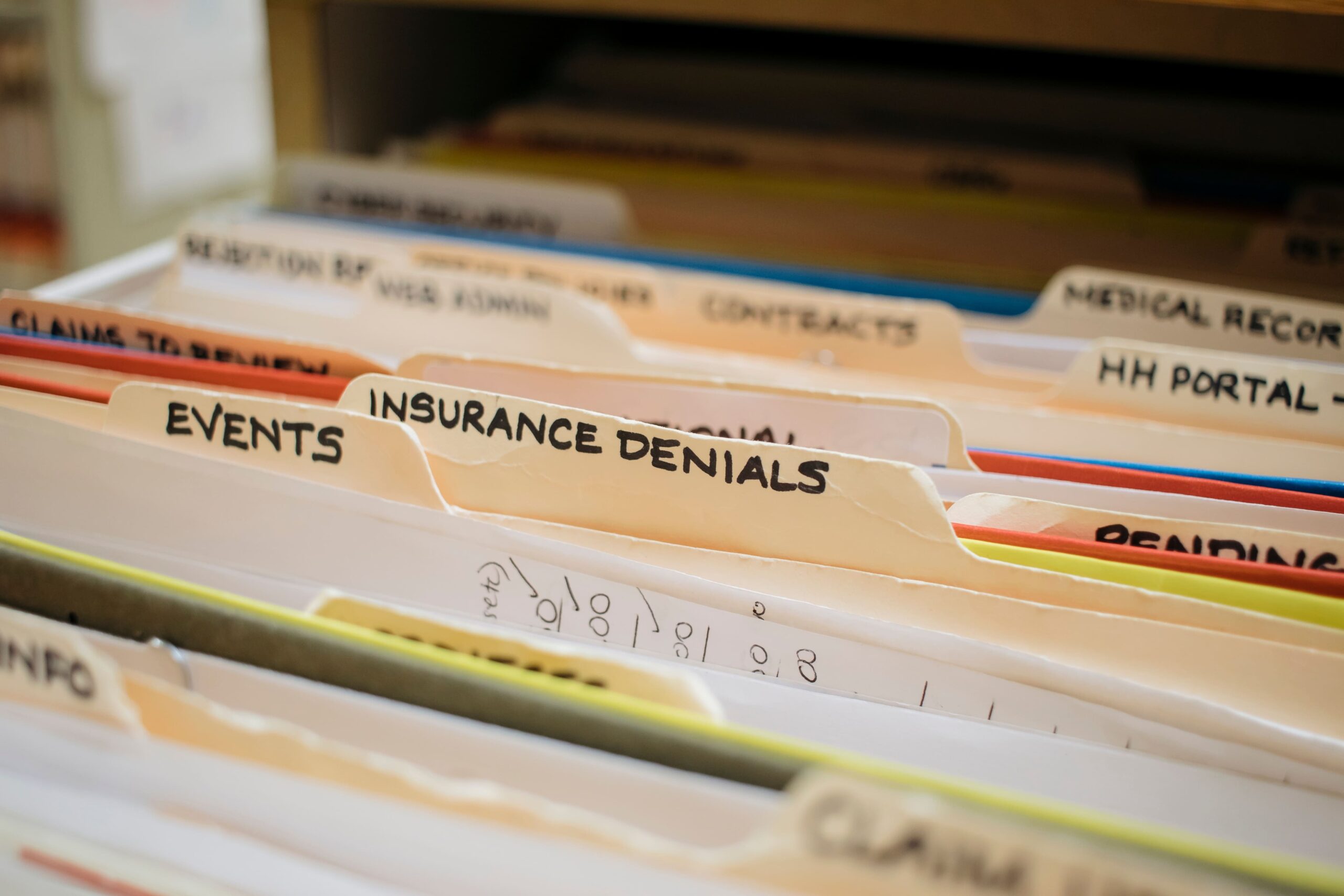
Have you ever thought what happens to an engineering drawing that is never digitized? It fades. It tears. It turns yellow. It gets buried in a plan room, folded incorrectly for the last time, or lost in a facility transition. And when a renovation project, permit resubmission, or legal review eventually calls for it, it simply isn’t there. That is the quiet crisis facing thousands of AEC firms, municipal agencies, and institutional archive managers across the United States today.
Engineering drawings are not passive records. As-built plans, structural schematics, MEP documents, and civil engineering site plans carry structural, legal, and operational weight that standard document handling cannot protect.
They are the authoritative record of how a building was actually constructed, and for any organization managing multi-decade archives of physical plan sets, the question of how to digitize engineering drawings and as-built plans is not a matter of convenience. It is a matter of institutional continuity.
The urgency is reflected in market data. The industrial engineering, design, and construction (IEDC) software market was valued at $10 billion in 2024 and is projected to grow at a CAGR of 7%, reaching $15 billion by 2030, driven in large part by the accelerating shift from analog to digital workflows across the built environment. (Source)
This guide explains the complete professional digitization process of engineering drawings and as-built plans – from collection assessment and document preparation through scanning, format selection, CAD conversion, QC, and delivery.
So, without any further ado, let’s explore!!!
Why Do Engineering Drawings Require Specialized Digitization?
Engineering drawing digitization is totally different from scanning office papers. It demands expertise in media types, huge sizes, precise outputs, strict chain-of-custody, and legal file standards.
Unique Challenges of Engineering Drawing Media\
Large-format technical drawings come on fragile materials. Here’s why each needs special care:
Mylar (polyester film): Stable size, but warps under pressure or humidity.
Vellum: Translucent and tears if unfolded incorrectly.
Sepia prints and cyanotype blueprints: Fade fast from light exposure.
Aged paper originals: Brittle, folded, sticky, or faded—needs prep before scanning.
For factories, cities, and builders, these drawings are the official record of your structures. Paper versions fade and tear over time. Engineering drawing scanning, and large-format scanning make them digital forever, immune to damage, always ready to use.
What is the Difference Between As-Built Drawings, Record Drawings, and Measured Drawings?
These three terms are used interchangeably in informal conversation, but are legally distinct document types with different digitization requirements and downstream functions.
As-built drawings are contractor-produced markups that document field changes made during construction. They are typically redlined on the original design drawings and reflect actual conditions at the time of completion, not the engineer’s original intent. They are produced by the contractor and handed over at project closeout.
Record drawings are the architect’s or engineer’s final, reconciled set incorporating confirmed field changes. They represent the professional’s certification of the final constructed condition. Record drawings carry greater legal weight than as-builts because they involve professional review and sign-off.
Measured drawings are produced through direct physical field verification or reality capture technology, independent of any original design intent. They are used when no reliable original drawings exist, or when existing documents cannot be verified against actual conditions.
Why this distinction matters for digitization: Each document type carries different metadata requirements, different legal standing in permitting and litigation scenarios, and different downstream use cases.
Misidentifying a contractor’s redlined as-built drawing as a certified record drawing or failing to tag each correctly in your digital archive creates compounding problems when those records are called upon for renovation planning, compliance review, or legal proceedings.
Are digitized engineering drawings legally admissible?
Yes, but it depends on the process and documentation. Institutional clients, municipal agencies, and estate representatives often ask this before starting a digitization project.
A digitized engineering drawing meets legal standards if handled correctly. The scan file alone isn’t enough. Key factors include:
Chain-of-custody record: Proves the original document’s handling from intake to output.
QC audit trail: Confirms every sheet was reviewed for accuracy.
Archival format: Use PDF/A, the ISO standard for long-term preservation, with file-level metadata.
For permitting, renovation, or litigation, request these from your provider:
Documented intake inventory of received originals.
Full QC audit trail for all sheets.
Delivery in PDF/A format.
ISO-certified workflows deliver these as standard—no special requests needed.
What Types of Engineering Drawings are Most Commonly Digitized?
Here’s a quick breakdown of the most common types digitized, their media, and key tips:
Document Type
Common Media
Key Handling Considerations
Architectural Drawings
Paper, vellum, mylar
Large ARCH D/E sizes; capture dense lines and title block metadata.
Structural Plans
Paper, mylar, sepia
Needs precise dimensions; scan reinforcing schedules at 400 DPI.
MEP Schematics
Paper, vellum
High annotations; details for mechanical, electrical, plumbing on one sheet.
Civil Site Plans
Paper, mylar, polyester
Oversized; often georeferenced for GIS use.
As-Built Drawings
Redlined paper, mylar overlays
Preserve layers, revisions, and legal metadata.
Shop Drawings
Paper, vellum
Sets with stamps and revision clouds; high-res scans essential.
Survey & Utility Maps
Paper, polyester
Fine lines, dense text; GIS-ready output.
Permit Sets
Paper, mixed
Stamps/signatures; track chain-of-custody.
Media like brittle vellum or rolled 1970s mylar demands specific scanners and prep. Classify your collection first. It’s key to quality digitization.
How are Engineering Drawings Professionally Digitized – Step by Step
Professional digitization of engineering drawings follows a structured, multi-stage process, not just simple scanning. This workflow ensures quality, compliance, and usability. It helps organizations prepare collections, set expectations, and evaluate providers. Here’s the industry-standard step-by-step process:
Collection Assessment and Inventory – Start with a formal intake. Review document condition, identify media types, verify sheet counts, map drawing sizes, and confirm output needs. For large collections in AEC firms or agencies, this scoping prevents inaccurate quotes or timelines.
Document Preparation and Condition Handling – Unfold, flatten, and stabilize fragile sheets. Remove clips, adhesives, and bindings. Triage issues like tears, fading, annotations, or non-standard sizes. Proper prep avoids most quality failures before scanning even begins.
High-Resolution Large-Format Scanning – Use flatbed, feed-through, or overhead scanners based on media sensitivity. Set resolution by need: 200 DPI minimum for legibility; 300–400 DPI standard for CAD or archival use. Choose bitonal for lines, grayscale for faded drawings, or color for stamps. Calibrate scanners per session.
File Format and Output Selection – Pick formats by end use: PDF/A for legal archiving, uncompressed TIFF for lossless storage, DWG/DXF for CAD, or GeoTIFF for GIS. Deliver both archival and working copies as needed, with specific compression and metadata.
CAD Conversion (If Needed) – Convert raster scans to editable vector files like DWG or DXF. This creates modifiable lines, arcs, and text for BIM, EDMS, or project reuse—not possible with images alone. It’s a separate skilled step, ideal for as-builts or renovations.
Quality Control and Verification – Perform 100% review: check legibility, dimensions, completeness, metadata, and formats. Generate an ISO-certified audit trail for legal proof. One bad sheet can risk permits or planning.
Indexing, Naming, and Secure Delivery – Use consistent naming (project, discipline, sheet, revision) and folder structures. Add metadata for search. Deliver via encrypted transfer, cloud, or physical media, with confidentiality from start to finish.
Secure Shredding of Originals (Optional) – After verification and client approval, destroy originals via NAID AAA-certified shredding. This ensures compliance with data privacy laws like GDPR or HIPAA, eliminates storage risks, and provides a certificate of destruction. Ideal for sensitive engineering plans no longer needed physically.
Ready to digitize your engineering drawings with this proven workflow? Call us at 1.510.900.8800 today for a free collection assessment and custom quote for a secure, compliant, and hassle-free process.
What Changes When Digitizing Large or Multi-Decade Plan Archives?
Digitizing 50 drawings is simple. Digitizing 5,000 turns it into a full project. Scale adds logistics, throughput, version control, and coordination that single-sheet quality can’t handle alone.
Key challenges at large scale include:
Phased Intake Logistics: Manage collections from multiple storage sites, like warehouses or offices.
Throughput Consistency: Ensure uniform quality across thousands of sheets without delays.
Version Control: Track revisions—preserve the latest sheet while archiving older ones.
Inter-Discipline Coordination: Index structural, MEP, civil, and architectural drawings under one naming system.
AEC firm data storage quadrupled from 0.9 TB in 2017 to 3.5 TB in 2021. (Source)
This shows rising digitization demands from BIM and CAD files. Organize archives right now, and they’ll stay useful for decades.
What Determines the Cost of Digitizing Engineering Drawings?
The following are the primary cost drivers in any professional engineering drawing/ large-format digitization project.
Cost Factor
What It Determines
Low vs. High Impact
Collection Volume & Sheet Count
Staffing, scheduling, throughput, and economies of scale
Primary driver; larger projects benefit from scale efficiencies
Document Condition & Media Type
Preparation time; handling protocol complexity
Mylar/vellum/sepia prints add significant preparation hours vs. clean paper
Drawing Size & Format Variation
Equipment selection; handling decisions at sheet level
ISO-certified 100% QC with audit trail is the professional standard for institutional collections
A free bulk estimate and project consultation is the appropriate starting point for any collection that cannot be self-scoped, particularly for large, multi-media, or institutionally significant archives.
Request Bulk Estimate →
Why Choose eRecordsUSA for Engineering Drawing Digitization?
AEC firms, agencies, and institutions trust eRecordsUSA for digitization that goes beyond scanning, delivering legally admissible, scalable archives ready for EDMS, or renovations.
Our Proven USPs:
Complete 8-Step Workflow: From free intake assessments to NAID AAA-certified shredding, covering 300–400 DPI scanning, CAD conversion, and PDF/A outputs for mylar, vellum, or sepia media.
100% QC & ISO Audit Trails: Full verification of every sheet’s legibility, dimensions, metadata, and completeness; your chain-of-custody proof for permits or litigation.
Large-Scale Expertise: Phased logistics, version control, and multi-discipline indexing handle thousands of sheets from multiple sites without quality loss.
Legal & Future-Proof: Court-admissible formats, and search-ready metadata ensure compliance (GDPR, HIPAA) and decades of usability.
No-Risk Start: Free collection scoping with custom quotes, no obligation, just precise planning for your archive’s unique challenges.
Call us at 1.510.900.8800, or write us at he***@*********sa.com to get your free assessment today!!!
FAQs About Engineering Drawing Digitization
1. How does BIM integrate digitized engineering drawings?
Building Information Modeling (BIM) uses digitized drawings as raster inputs converted to editable 3D models. Scanned as-builts feed Revit/AutoCAD via DWG/DXF vectors, enabling clash detection and facility management. EDMS stores source files with BIM metadata links.
2. What’s the difference between BIM and EDMS for drawings?
BIM (Building Information Modeling) creates intelligent 3D models; EDMS (Engineering Document Management System) organizes 2D drawings with version control. Digitized plans live in EDMS for search/retrieval, then import to BIM for modeling.
3. How long does large archive digitization take?
Timeline depends on volume/condition: 1,000 clean sheets = 2-4 weeks; 10,000 mixed-media = 3-6 months with phased intake. Professional workflows batch prep/scan/QC at 500-1,000 sheets/week using multiple scanner stations.
4. Can digitized drawings meet Indian building code requirements?
Yes, DDA/CPWD accepts digitized as-builts if PDF/A format includes chain-of-custody, 400 DPI scans, and geo-referencing for site plans. NBCC mandates ISO audit trails matching NBC 2016 standards for renovations/permits.
5. What security standards protect digitized engineering plans?
NAID AAA + ISO 27001 ensure secure transfer, and destruction certificates.
Preservation-grade digitization begins with protecting what holds the record together.
The National Archives holds more than 13.5 billion pages of historically valuable records — yet as of 2024, fewer than 300 million of those pages have been digitized and made available online. (Source)
That means the overwhelming majority of the nation’s analog archives remains accessible only through in-person visits or requests for physical reproductions.
For government agencies, law firms, county recorders, corporate archives, and university special collections across the San Francisco Bay Area and Sacramento, this gap between physical records and digital access is not an abstract national statistic. It is an operational reality measured in shelf-feet of unreachable bound volumes.
The challenge is not simply scanning. The challenge is scanning correctly: capturing every page at preservation-grade quality without introducing mechanical stress to binding structures that may have held for decades or centuries.
This guide addresses the full professional process for digitizing bound volumes without damaging the spine. From binding-type classification and pre-scan conservation triage, through capture quality control, FADGI-compliant output standards, long-term digital preservation, and the California regulatory framework that governs institutional digitization across San Francisco, Oakland, San Jose, Sacramento, and the surrounding counties.
Let’s start exploring from scratch.
What is a Bound Volume?
A bound volume is a set of individual pages, including handwritten, typed, or printed, permanently joined along one edge by stitched thread, adhesive, or both, and enclosed within protective covers.
Common examples include ledgers, deed books, minute books, court registers, assessment rolls, and institutional record books that served as the primary format for official recordkeeping before digital systems existed. Because the pages cannot be separated without destroying the object, the method of digitization is inseparable from the preservation of the volume itself.
What Binding Type Does Your Bound Volume Have & Which Scanner Does It Require?
Every binding structure carries a different risk profile and demands a specific equipment response.
No single scanning methodology applies universally to bound books/volumes. The binding structure is the governing variable:
It dictates the maximum safe opening angle,
The cradle configuration required,
The appropriate scanner type, and
Whether non-destructive digitization is viable at all without prior conservation stabilization.
For bulk institutional collections, mismatching equipment to binding type is the single most common source of both physical damage and degraded image quality.
Case-bound Volumes and the Overhead V-Cradle Book Scanner Standard
Case binding – The standard format in modern government registers, corporate minute books, and administrative ledgers common across county agencies is the most compatible format for overhead V-cradle book scanners.
These scanners capture images from above while the volume rests in an adjustable cradle that limits the opening angle to 90–120 degrees, eliminating the flatbed glass pressure that fractures adhesive bonds.
Before the cradle angle is set, adhesive integrity must be confirmed at intake: a binding that looks intact may already have subsurface adhesive failures that a forced angle will propagate.
Perfect-bound Archives and the Single Point of Structural Failure
Corporate records and administrative volumes produced are typically perfect-bound, meaning the pages are held together only by a strip of glue at the spine.
Over time, that glue dries out and becomes brittle. Opening the volume too wide, even slightly past its natural position, puts stress on that glue and causes pages to crack away from the binding.
To prevent this, these volumes are scanned at the smallest safe opening angle, with extra support placed under each page, and the glue strip is inspected for signs of weakness on every volume before scanning begins.
Sewn Bindings in Historical Deed Books and Legal Registers
Some older bound volumes, particularly historical deed books, church records, and notarial registers, are held together with hand-stitched thread rather than glue. Government offices hold large collections of these sewn registers. Stitched bindings tend to open more naturally than glued ones, but the thread itself is the weak point.
Over time, thread fibers break down quietly; a volume can open without any sign of strain and still suffer permanent internal damage to its stitch structure.
For this reason, every sewn binding is examined under magnification before scanning begins, so the right cradle angle can be set without putting stress on already-weakened thread.
Vellum and Limp-Bound Records: Why Some Covers Cannot Touch a Scanner
Vellum, a cover material made from prepared calfskin, was commonly used on official records before the 19th century. Vellum is highly sensitive to changes in room humidity and temperature. A cover that looks perfectly flat at intake can begin to warp or buckle within minutes of being handled in a different environment, which shifts every page beneath it out of position.
When a binding is too fragile or too stiff to open safely beyond a 60-degree angle, the volume is captured using an overhead camera rig – a system where nothing touches the book at any point during scanning.
Leather-Spine Volumes and Red Rot: When a Volume Cannot Be Scanned At All
Many legal, municipal, and church archive volumes across the Greater Bay Area and Sacramento were bound in half-leather or full-leather covers. A common condition in these older leather bindings is red rot – a deterioration process where atmospheric pollution causes the leather to break down into a reddish, powdery residue.
Beyond damaging the cover itself, red rot powder contaminates the pages inside, nearby volumes on the shelf, and the scanning equipment it comes into contact with.
Any volume showing active red rot is immediately set aside. It does not move to any scanning equipment until a conservator has stabilized the leather in writing, typically using a leather consolidant treatment that stops the deterioration before handling continues.
Accordion Fold, Guard Books, and Oversized Records: Why They Need a Different Machine Entirely
Surveying records, property plat maps, oversized assessment registers, and large-format archive volumes cannot be placed in a standard V-cradle book scanner. They are simply too large, and forcing them into a standard setup would damage them.
These materials are scanned using a planetary scanner: a large-format overhead imaging system where the document lies completely flat on a surface and a high-resolution camera captures it from above, with no pressure, no folding, and no contact with the binding at any point.
Every oversized format requires its own equipment configuration. There is no universal setting that transfers from one format to the next.
What Must Be Assessed and Resolved Before a Bound Volume Enters the Scanning Queue?
Digitization is a handling event, and that handling must be preceded by a formal, documented condition review against a defined trigger list.
Proceeding without it is not a time-saving measure: it is an unmanaged liability.
Six Conservation Triggers That Halt Digitization Until Resolved
Active mold or foxing — fungal spores spread through handling and cross-contaminate adjacent volumes and scanning surfaces.
Detached boards or broken hinges — a structurally separated cover cannot be positioned in a V-cradle without displacing the binding further.
Red rot on leather-spine volumes — powdery leather particulate contaminates pages and equipment; leather consolidant stabilization must be confirmed in writing first.
Water tideline damage — paper at tideline boundaries is frequently embrittled, making gutter tearing during page turns a high and documented risk.
Extreme paper embrittlement — paper that fragments at page corners during preliminary inspection cannot withstand standard overhead scanning without active page loss.
Insect or rodent damage — structural compromise from biological activity requires a documented conservation assessment before any digitization event is scheduled.
Once a bound volume clears all six conservation triggers, three additional intake standards govern how it is handled, documented, and prepared before a single scan is made.
How Is Chain-of-Custody Documentation Used at Intake for Bound Volume Digitization?
ISO-certified workflows require a documented condition record for every bound volume at intake before processing begins.
For California state agencies in Sacramento and county departments across the Bay Area subject to the State Records Management Act, this record is a legally relevant document: it establishes the physical condition of official records at the precise point they entered the scanning provider’s custody.
If any dispute arises later about the pre-existing state of the materials, an accurate intake log protects both the institution and the provider.
Should Cotton Gloves Be Worn When Handling Bound Volumes for Archival Scanning?
Cotton gloves should not be used when handling paper-based bound volumes for scanning. Bare, clean, dry hands are the current professional standard; they provide the tactile sensitivity needed to detect page resistance before a tear occurs.
Cotton gloves reduce dexterity, and their fibers can snag on deteriorated page margins, causing the very damage they are meant to prevent.
Nitrile gloves apply only to photographic materials, vellum, parchment, and silver gelatin surfaces, where skin oils are a direct preservation concern.
The assumption that cotton gloves are universally required is a widely repeated procedural error that both the Library of Congress and TownsWeb Archiving have explicitly addressed in their handling guidance.
What Page Turn, Support, and Environmental Standards Apply During Bound Volume Capture?
Pages are turned slowly, supported from beneath, and never forced. Resistance during turning is a diagnostic signal that halts the scan, not an obstacle to push through.
Foam bolsters, book snakes, and polyethylene foam wedges are placed on both sides of the open volume to prevent spine over-flexion during the dwell period while each image is captured.
Work surfaces are clean, temperature-stable, and low-humidity. Dust is removed from covers before opening — and always away from the pages, never inward.
How do Gutter Distortion and Lighting Failures Corrupt Bound Volume Scans at Scale?
An uncorrected gutter and uncontrolled lighting are not cosmetic failures; they are embedded legibility and OCR errors that scale with every volume in the collection.
Two capture-quality variables:
Gutter curvature and
Lighting control, which determines whether a digitized bound volume produces a usable, searchable institutional asset or an image repository that requires manual review of every page. Both are governed by physics. Both are controlled at the equipment and protocol level before capture begins. Neither can be corrected in post-processing without altering document content.
How Does Gutter Curvature in Bound Volume Scanning Degrade OCR Accuracy?
When a bound volume is opened, the binding tension curves the pages inward toward the spine.
This curvature zone. The gutter causes text nearest the binding to appear compressed, curved, or partially shadowed in the captured image.
When OCR is applied to gutter-distorted images, characters in this zone are systematically misread, compressed into unrecognizable sequences, or omitted entirely.
Across bulk institutional collections spanning hundreds or thousands of bound volumes, uncorrected gutter distortion produces thousands of corrupted, unsearchable pages.
The functional value of any digitization investment is directly proportional to the percentage of content that OCR can accurately process.
What are the Three Professional Methods for Correcting Gutter Distortion in Bound Volume Scanning?
Gutter distortion in bound volume scanning is corrected using three sequential methods applied at the source, at the point of capture, and after capture.
Adjustable cradle angle – The scanning cradle is configured to the volume’s natural resting position rather than forced to a fixed standard angle, reducing page curvature at the source before any image is captured.
Low-pressure glass screen – For overhead scanners equipped with a glass platen, a featherweight panel gently flattens the open page surface in the gutter zone without applying mechanical stress to the spine. The pressure is calibrated to flatten the curve without compressing the page.
Post-capture algorithmic dewarping – Image processing tools, including ABBYY FineReader, ScanTailor, and purpose-built archival correction platforms. Apply page-curve correction to every image after capture, restoring geometric accuracy to gutter text before the OCR engine processes the file.
Dewarping is applied per image rather than as a batch parameter, because curvature varies naturally across a volume, and a single uniform correction value will over-correct some pages and under-correct others.
What Lighting Standard Is Used for Professional Bound Volume Scanning?
Bilateral diffuse lighting is the standard lighting configuration for professional bound volume scanning.
Light sources are positioned on both sides of the scanning head, eliminating gutter shadow and removing specular hotspots from glossy or coated page surfaces. This is a hardware-embedded property of institutional scanning equipment — not a software setting and not a post-capture adjustment.
The lighting architecture of a vendor’s equipment should be verified as a procurement requirement, not assumed after a contract is signed.
When Is Raking Light Used During Bound Volume Digitization?
Raking light – angled, directional illumination is used when the document surface carries physical information that standard diffuse lighting cannot reveal.
Embossed seals, impressed text, relief stamps, notarial stamps, and wax impressions are all surface features that diffuse lighting flattens into invisibility.
Raking light reveals the surface topography of these features by casting controlled directional shadows across them. Without it, this category of information is entirely undetectable in a standard scan and permanently lost from the digital record.
When Is Infrared Imaging Used to Capture Text in Damaged Bound Volumes?
Infrared imaging is used when visible-light capture cannot reproduce the text. It is warranted for bound volumes with iron gall ink corrosion, water damage obscuring text, severe ink fade, or deliberate cancellation over content that must remain legible.
Iron gall ink — the dominant writing medium in Western records through the 19th century and into the 20th corrodes the paper support as it oxidizes, eventually creating voids where the most heavily inked text once was. Infrared imaging penetrates surface damage and ink degradation to reveal underlying text that no other capture method can recover.
Why Do Consumer Camera Setups Fail for Archival Bound Volume Scanning?
Consumer camera setups – table lamps, room fluorescents, and on-camera flash produce three unresolvable capture failures:
Gutter shadow,
Specular glare, and
Uneven exposure across the page surface.
None of these can be corrected in post-processing without altering document content. Brightening a shadowed gutter erases faint ink. Increasing contrast to compensate for uneven exposure obscures fine detail. Consumer camera rigs do not offer a cost-effective alternative to institutional scanning equipment; they produce simultaneously damaged physical volumes and degraded digital images, with no recovery path for either.
What are the Eight Stages of a Professional Spine-Safe Bound Volume Digitization Workflow?
A structured, documented workflow is the operational foundation of accountable archival scanning at any volume.
Stage 1 — Intake and Chain-of-Custody Logging
Every volume is logged at intake with condition notes, binding classification, physical dimensions, and page count. Chain-of-custody documentation opens at this stage and closes only upon confirmed return of the physical volumes.
Confidentiality agreements are executed at intake before any physical access to volume contents for government records, legal archives, and corporate materials subject to privacy obligations.
Stage 2 — Conservation Triage Against the Six-Point Trigger Checklist
Every volume is assessed against the six conservation triggers established in Section 3. Volumes flagged for stabilization are quarantined from the active scanning queue and documented with the specific trigger condition and the required intervention.
No flagged volume advances until stabilization is confirmed in writing by a qualified conservator or the project supervisor.
Stage 3 — Binding Classification and Protocol Assignment
Each volume receives a documented protocol assignment: equipment type, cradle angle or camera rig configuration, page turn method, and lighting configuration, all determined by binding classification per the framework in Section 2.
This assignment is recorded in the project file and governs every subsequent stage. For bulk collections with mixed binding types, a binding-type inventory is produced at this stage to support equipment configuration planning.
Stage 4 — Equipment Calibration to the Largest Volume in the Batch
The scanner is calibrated to the largest volume in the batch before any production capture begins. Color calibration targets are recorded at the start of every session. ISO-certified workflow requires calibration records for every project.
Stage 5 — Controlled Capture with Operator Oversight at Every Page
In-house scanning with trained operator oversight at every page. Cradle angle is adjusted per volume within the batch. Gutter curvature is monitored in real time. Pages that resist turning pause the scan; they are flagged for review, not forced.
No throughput target overrides physical handling protocol at any stage. This is the principle that distinguishes preservation-grade scanning from high-volume document processing: the scan serves the record, not the production schedule.
Stage 6 — Post-Processing: Dewarping, Deskewing, and Completeness Verification
Every image is corrected for gutter distortion via algorithmic dewarping and for rotational skew via deskewing. Brightness is normalized across the full image set without altering content — no brightening that erases faint ink, no contrast adjustment that obscures fine marginalia. Completeness is verified against the intake log: every page of every volume is accounted for before the batch advances. Quality control is performed on 100% of images for institutional-grade projects — not on a statistical sample.
Stage 7 — OCR Processing, Metadata Embedding, and Output Formatting
OCR is applied to all corrected images. Metadata is embedded per client-specified schema. Output is formatted to specification: searchable PDF, PDF/A (ISO 19005), TIFF, or JPEG2000. Bookmarking and hierarchical indexing are applied for large-volume deliverables. File naming follows a structured convention established at intake and applied consistently across every file in the deliverable.
Stage 8 — Final QC Review and Verified Institutional Return
The complete deliverable is verified against the intake log before release: every volume, every page, every output file confirmed. Chain-of-custody documentation is completed and returned with the deliverable. Physical volumes are returned.
What FADGI Star Rating and Archival Output Format Should California Institutions Specify for Bound Volume Digitization?
A raw scan is source material — a FADGI-compliant, post-processed, metadata-embedded file is the preservation asset.
The Federal Agencies Digital Guidelines Initiative, known as FADGI, defines the United States quality benchmark for digitization through a two-to-four star rating system that measures resolution, tonal response, color accuracy, and noise for reflective materials, including bound volumes.
Its Technical Guidelines for Digitizing Cultural Heritage Materials, third edition, published in May 2023 and maintained by the Library of Congress, removed one-star specifications for rare and special collections categories entirely, raising the effective minimum quality floor for any historically significant bound volume digitization project.
Two-star quality is appropriate only for routine administrative records with no ongoing preservation obligation.
Three-star is the minimum standard for institutional archival collections, including municipal records, county agency backfiles, law firm archives, and corporate records departments.
Four-star preservation quality is required for rare, irreplaceable, or historically significant bound volumes, including pre-20th century deed books, superior court registers, state archive materials, and university special collections holdings.
Institutions must specify the required FADGI star rating in their procurement documents and require verifiable evidence in the form of calibration records, target measurements, and quality control logs, not vendor self-attestation.
ISO 9001 certification provides the documented process controls that FADGI compliance requires as its evidential foundation, because compliance without documentation is not compliance at all.
Once the standard is set, every image in the project is corrected for gutter distortion through algorithmic dewarping and for rotational skew through deskewing before any further processing occurs.
Brightness and contrast are then normalized consistently across the entire image set and across all volumes in a bulk run. This is because inconsistent normalization across a large archive produces an uneven deliverable where some volumes are clearly legible, and others are washed out or underexposed, and post-project correction at that scale is not operationally feasible.
For printed text in modern bound volumes, optical character recognition accuracy of ninety-eight to ninety-nine percent is achievable on correctly captured and processed images.
For historical handwritten records, the dominant content type in deed books, court minute books, and assessment registers, OCR accuracy varies by legibility, historical script style, and ink condition, and those benchmarks are communicated to institutional clients before a project begins, not disclosed after delivery.
Metadata is embedded in every file per the client’s specified standard: Dublin Core for most institutional archives and IPTC Core for image-heavy bound records, with mandatory elements including document title, origination date, source institution, chain-of-custody reference, and access or copyright notice.
File naming follows a structured convention established at intake and applied consistently, because automated repository ingestion systems depend on naming consistency to process metadata correctly.
The preferred master file format for long-term preservation is TIFF — an uncompressed format providing maximum image fidelity and broad institutional compatibility across county, state, and university repositories.
PDF/A, defined under ISO standard 19005, is the archival-grade format required for any official records subject to government records law, because it embeds fonts, metadata, and color profiles directly within the file rather than referencing external resources that may become unavailable over time.
Searchable PDF is the access-layer derivative generated from the PDF/A master for day-to-day reference and public access portals.
JPEG2000 is the wavelet-compressed archival format used by the Library of Congress and Internet Archive for large-scale digital repository integration. It is appropriate where that level of repository alignment is required.
When Is Disbinding a Bound Volume the Responsible Digitization Choice — and When Is It Never?
Disbinding is a documented last resort — never a default, never the vendor’s unilateral call.
Disbinding is the act of separating the pages of a bound volume from its binding structure to enable flatbed or sheet-fed scanning. It is irreversible. It permanently alters the physical object. It is never the first option and never the scanning provider’s unilateral decision. It is a documented, client-authorized action taken only after non-destructive alternatives have been formally assessed and found inadequate for a specific volume’s condition and content requirements.
Three Conditions Where Disbinding a Bound Volume May Be the Responsible Choice
Binding adhesive failure has already progressed to active page detachment during controlled opening. When pages are separating from the spine during assessment, not during forced opening, disbinding under controlled conditions with individual page support may cause less additional structural damage than continued opening stress on an already-failed binding.
The volume has no preservation value as a physical object. A duplicate administrative register, a photocopy-era bound printout, or an internal working reference retained solely for its text content, where the institution has confirmed in writing that the physical volume carries no ongoing access, legal, or historical value, may be appropriate for disbinding.
Paper is more fragile at the binding channel than in the page field, and repeated gutter stress at the margin would cause more page loss than a single controlled disbinding operation with appropriate page support.
Disbinding is never a throughput efficiency measure, a solution to difficult binding types that simply require better equipment, or a decision made without explicit written client authorization.
Every decision made from intake through delivery is either a protection or a liability. When those decisions are made by a trained, accountable, in-house team working under ISO-certified workflows, the institution retains full visibility into every stage of the process and full confidence in the integrity of what is returned.
When they are made by a vendor who disburdens, outsources, or shortcuts, the institution absorbs the consequences — physical, legal, and archival, with no path to recovery.
Bound volumes are not replaceable. The records inside them are not reproducible. The standard of care they receive during digitization is the standard of care your institution’s history receives permanently.
eRecordsUSA is a locally owned and operated digitization facility serving institutions, government agencies, law firms, corporate archives, and bulk clients across the San Francisco Bay Area and Sacramento. With over 20 years of in-house experience, ISO-certified workflows, and a 5-star rated service record on Google and Yelp, every bound volume project is handled by a trained professional.
Free consultations and free bulk estimates are available for collections of any size. Multilingual support is offered in English, Hindi, Punjabi, Spanish, and Mandarin. The facility is wheelchair-accessible with free on-site parking.
Call us at 1.510.900.8800, or write us at he***@*********sa.com today to schedule your free consultation or request a bulk estimate for your bound volume digitization project.
Frequently Asked Questions About Bound Volume Digitization
Q1: Can bound volumes be picked up and returned, or does the client need to deliver them?
eRecordsUSA accepts both drop-off and scheduled pickup for bound volume digitization projects. Institutional clients across the SF Bay Area and Sacramento can arrange collection logistics during the free consultation.
Q2: How long does bound volume digitization take for a small collection of under 10 volumes?
Small bound volume collections of under 10 volumes are typically processed within 3 to 7 business days, depending on binding condition, required resolution, and output format. A confirmed timeline is provided at the consultation before any project begins.
Q3: Is bound volume scanning available for personal or family archive collections, not just institutions?
Yes. eRecordsUSA digitizes personal and family-bound archives, including heirloom ledgers, diaries, and estate records alongside institutional collections. The same spine-safe protocols, confidentiality standards, and free consultation apply to every project, regardless of size.
Q4: What happens if a bound volume is damaged during the scanning process?
eRecordsUSA’s ISO-certified intake documentation records every volume’s condition before scanning begins. Chain-of-custody logs protect both the client and the provider. Any pre-existing condition is documented at intake, and all handling follows conservation-grade protocols to prevent damage during the digitization process.
Choosing between non-destructive scanning of a bound volume or disbinding it for sheet-fed digitization impacts the entire project.
It’s not just a style choice; it’s a critical decision that decides if a rare ledger stays intact, if law firm files comply with retention rules, or if a university’s 10,000-volume project costs $50,000 instead of $500,000.
The global book digitization market reflects just how consequential this decision has become at scale.
The global automatic book scanner market is projected to grow at a CAGR of 4.0% through 2030, driven, notably, by rising institutional demand for high-precision, non-contact bound-volume imaging across libraries, government agencies, and archival organizations. (Source)
Meanwhile, around 60% of archival materials are already available in digital form, and over 55% of libraries and archives now use digital cataloging systems, figures that underscore how far digitization has moved from pilot initiative to operational standard. (Source)
Why Professional Assessment Comes First in Book Scanning?
Professional collection assessment comes first in every credible digitization project before scanning a single page. Skipping it risks damage, non-compliance, and massive costs. It’s the initial chain-of-custody step in ISO-certified workflows, guiding all method choices.
What Does a Thorough Assessment Check?
Qualified specialists inspect:
Binding and structure: Sewn, glued, wire-bound, or fragile spines that limit opening angles.
Paper condition: Age, brittleness, acid degradation, water damage—needing humidity control and special handling.
Ink and media: Stability of pigments in manuscripts, color plates, or annotations to minimize light exposure.
Format variations: Oversized pages, foldouts, maps requiring custom equipment.
Beyond Physical Traits, Assessments also cover:
Institutional restrictions on handling, transport, or access.
A professional consultation from eRecordsUSA prevents errors in large-scale projects, saving thousands.
Professional Assessment Standard
FADGI’s Third Edition Technical Guidelines (May 2023) explicitly state that bound materials must not be opened beyond the point where the binding is stressed, and that in some cases, this means a volume cannot be imaged at all using standard equipment. This determination requires physical evaluation, not remote assumption. (Source)
What are the Two Book Scanning Methods and How Do They Differ in Process?
Destructive and non-destructive are two scanning methods for books. Let’s explore both of the book scanning methods in detail:
What is Destructive Book Scanning?
Destructive book scanning, which is also referred to as disbind-and-scan, cut-and-scan, or sheet-fed digitization, is the method by which a bound volume is physically disassembled before scanning.
A precision hydraulic or guillotine cutter removes the binding spine, separating the volume into individual flat sheets.
Those sheets are then fed through an automatic document feeder (ADF) or a high-throughput flatbed scanner at processing rates significantly faster than those permitted by bound-volume equipment.
The resulting pages, now loose and flat, yield consistent, shadow-free scans with high geometric accuracy.
The defining characteristic of this method is that it is irreversible.
Once a book is disbound, it cannot be reassembled. This is not a downside to be minimized; it is a factual constraint that must be acknowledged and deliberately authorized before a single volume is processed.
Destructive scanning is used responsibly only in these documented cases:
Surplus or duplicate reference volumes with confirmed replacements.
Periodical runs without preservation requirements.
Organizations are consolidating space permanently.
Academic presses are digitizing back-catalog editions for republication.
Government or municipal archives handling records past the retention period
Critical Protocol Note
A professional digitization service will obtain explicit, written client authorization before applying destructive methods to any volume. No item should ever be disbound based on verbal instruction or volume-level assumption. Written authorization is not optional — it is the standard of care for any ISO-certified operation handling collections on behalf of institutions, estates, or legal entities.
What is Non-Destructive Book Scanning?
Non-destructive book scanning, also referred to as spine-safe scanning, non-invasive digitization, or bound-volume imaging, is the method by which a book or bound volume is digitized without any physical alteration to its structure.
The volume is placed in a V-cradle or on an adjustable overhead book cradle that supports the spine at a controlled, structurally safe opening angle.
An overhead planetary scanner, positioned above the open book rather than pressing it flat against a platen, captures each page spread using a high-resolution camera array and purpose-designed LED lighting engineered to minimize shadow at the gutter.
No pages are removed. No spine is cut. No binding is stressed beyond what the physical structure of the volume can safely accommodate.
The original is returned to the client in the same condition it arrived in, a commitment enforced through a documented chain-of-custody from intake to return.
How Does Scanning Method Affect Image Fidelity, Gutter Correction, and OCR Accuracy?
The method you choose upstream determines image quality, searchability, and research utility downstream.
How Professional Equipment Resolves The Gutter Distortion Problem?
The most significant technical challenge in non-destructive book scanning is one that no competing digitization guide discusses with any depth: Gutter distortion.
When a bound book is opened and placed for imaging, the pages near the spine curve inward toward the binding. This curvature produces two distinct quality problems.
First, it creates a geometric distortion: text near the gutter appears stretched, compressed, or angled, making those lines difficult or impossible to read accurately in both the raw scan and any downstream OCR output.
Second, the curved surface catches shadow from the binding, producing a dark band across the inner margin that further degrades legibility.
Professional-grade equipment addresses this at three levels simultaneously.
At the hardware level, Adjustable V-cradles and angled book cradles hold volumes at a controlled 90–120° angle. This minimizes page curvature without stressing the binding.
Overhead planetary scanners use dual-LED lights at precise angles. They eliminate gutter shadows and provide even page illumination.
At the software level, curve-flattening algorithms analyze each page’s geometry in software. They apply corrections to straighten baselines and restore accurate text shape.
Deskewing corrects residual page angle; keystone correction addresses perspective distortion from camera angle; and adaptive contrast normalization compensates for any remaining shadow gradient across the page surface.
Destructive scanning, by contrast, produces pages that lie completely flat, eliminating gutter distortion by design. This is a genuine technical advantage of the disbind-and-scan method for collections where physical preservation is not required, and it should be acknowledged as such.
Flat pages produce consistent, geometrically accurate scans with uniform illumination and no shadow correction requirements.
For high-volume periodical runs, surplus reference collections, or back-catalog republication projects, this throughput and consistency advantage is real and meaningful.
What separates a professional digitization service provider like eRecordsUSA from a commodity scanning vendor is the ability to get the same high-quality, accurate results with 100% audited results from non-destructive scans through strict post-processing.
eRecordsUSA services apply fixes consistently to huge collections of thousands of books, without losing quality at scale. They handle everything in-house, with documented quality checks at every stage of the batch process, unlike outsourced work, where you can’t verify consistency.
How Scanning Method Affects OCR Accuracy and Text Searchability?
OCR – optical character recognition is what transforms a scanned book page from a photograph into a searchable, indexable digital document. For most institutional clients, the searchability of the output is not a secondary consideration; it is the primary deliverable.
A 5,000-page bound archive that cannot be searched by keyword has limited research utility regardless of image resolution.
OCR accuracy is not primarily a function of the software engine. It is a function of input image quality. And input image quality is directly shaped by the scanning method and the quality of post-processing applied before OCR is run.
Destructive scanning, producing flat, shadow-free, uniformly aligned pages, yields the highest baseline OCR accuracy for clean printed text – professional services typically achieve 99%+ character accuracy on modern printed materials processed via sheet-fed methods.
Non-destructive scanning, while producing equally high-resolution images, introduces the variables described above — residual curvature, gutter shadow, and page angle variation that must be corrected through pre-processing before OCR is applied.
The professional pre-processing pipeline for non-destructive scans before OCR includes:
Deskewing to correct page tilt and establish horizontal text baselines;
Shadow removal to eliminate dark regions that OCR engines interpret as characters or noise;
Noise reduction to clean scanner artifacts and paper texture that interfere with character recognition; and
Adaptive contrast normalization to compensate for faded or uneven ink across aged paper.
When this pipeline is applied correctly and reviewed at quality assurance checkpoints, non-destructive scans of clean printed text achieve OCR accuracy within 1 to 2 percentage points of sheet-fed output.
All organizations submitting permanent records to the National Archives and Records Administration (NARA) or the Library of Congress must meet FADGI guidelines, with a minimum 3-star rating required for textual records, which mandates scanning at a minimum of 300 DPI in uncompressed TIFF format.
Four-star archival master quality requires a minimum of 400 DPI. These are not aspirational standards; they are compliance thresholds for institutional submissions.
Understanding the technical quality implications of each method is not an academic exercise. It is how institutional clients evaluate whether a digitization service will produce output that meets their actual research, compliance, and operational requirements.
Side-by-Side Comparison: Method, Quality, Cost & Use Case
Dimension
Non-Destructive (Spine-Safe)
Destructive (Disbind-and-Scan)
Physical Impact
Zero — original returned intact in identical condition
Irreversible — binding removed, volume cannot be reassembled
Full documentation through return — required for legal context
Full documentation through disposition — written client authorization required
Post-Scan Disposition
Volume returned intact; pickup/delivery across SF Bay Area
Certified shredding with documentation, or return of loose pages
FADGI Compliance
Achievable at 3-star/4-star with planetary equipment
Achievable — disbound pages treated as standard document scanning
Authorization Required
Standard project authorization
Explicit written client authorization before disbinding
When to Choose Non-Destructive Scanning?
Non-destructive scanning is ideal for more scenarios than you might think.
Key use cases include:
Rare and limited-edition books: Never disbind if provenance, condition, or collector value matters, no matter the project scale.
Legal and corporate records: Ledgers, minute books, bound correspondence, and court files need intact originals plus certified digital copies for audits, retention, and evidence.
Estate libraries: Multi-generational provenance affects inheritance value—handle non-destructively as a fiduciary duty.
Cultural and historical items: Religious texts, genealogical registers, and manuscripts hold irreplaceable significance beyond their cost per page.
University special collections: Institutions from UC Berkeley to UC Santa Cruz follow strict policies against destructive processing of primary sources.
In the San Francisco Bay Area—home to top research universities, law firms, estates, cultural groups, government archives, and tech/biotech firms—demand for preservation-grade bound-volume digitization is sky-high.
Our 20+ years of ISO-certified, in-house processing with a full chain of custody ensure reliable bulk-scale results.
When Destructive Scanning Makes Sense?
Destructive scanning works best when preservation needs are fully met—not just assumed. It’s efficient for non-valuable duplicates.
Ideal scenarios:
Surplus institutional copies: Confirmed replacements exist, and the owner waives physical retention.
High-volume reference libraries: Deaccession superseded collections during space consolidation, with no preservation rules.
Out-of-print publications: Academic/commercial presses use it for back-catalog digitization, print-on-demand, or republication—getting flat, high-accuracy scans.
Expired government records: Past statutory retention, with disposal authority.
Professional safeguards:
Pre-project volume review flags preservation risks for your approval.
Precision disbinding with clean cuts (hydraulic/guillotine), not tearing.
This ensures responsible, high-quality destructive scanning.
What Is Hybrid Book Scanning & When Do You Need It?
Hybrid book scanning mixes non-destructive and destructive methods for large, mixed collections. Most aren’t uniform—pro pros assess and segment them precisely, avoiding binary “all or nothing” choices that waste money or risk preservation.
Why Hybrid for Real-World Collections?
Simple advice fails big projects. Instead:
University libraries: Scan 4,000 rare editions, faculty letters, and histories non-destructively—while disbinding 12,000 surplus journals for efficiency.
Law firms: Preserve bound case files intact; destructively scan replaceable digests and guides.
Estates: Non-destructively handle heirlooms and first editions; disbind expendable references.Using one method for everything? Too costly or risky.
How Hybrid Workflows Work?
Pre-scan assessment: Check each volume/batch using clear criteria—binding condition, paper age, replacement status, client rules.
Smart routing: Preservation items go non-destructive (full chain-of-custody). Expendables go disbind-and-scan for speed/cost.
Unified management: Single intake, tracking, quality checks, timeline, and delivery—one archive, no hassle.
This delivers efficient, preservation-smart digitization at scale.
Make the Right Scanning Choice Today
Your bound collections deserve digitization that balances preservation, compliance, cost, and quality. Don’t risk damage, delays, or sky-high bills with guesswork.
Ready for bulk-scale results? Contact eRecordsUSA now for a free professional assessment. We’ll review your volumes, recommend the optimal hybrid workflow, and deliver ISO-certified archives fast. Call us today at 1.510.900.8800 or write to us at he***@*********sa.com to preserve what matters most and streamline the rest.
Currently, every organization manages one common liability: physical records. Whether they fill filing cabinets, shelves, and rows of archive boxes, paper records carry costs that compound in silence.
The decision to digitize documents is not neutral. In measurable financial terms, it is a decision to absorb recurring, escalating losses with no end in sight.
This guide targets decision-makers, estate administrators, institutional archivists, bulk records holders, legal and medical practices, HOAs, government agencies, and multi-generational family archives. It provides a rigorous, data-supported framework.
Use it to evaluate the true return on investment of professional document digitization.
According to the research, the global document management market is poised to exceed USD 37.13 billion by 2035, growing at over 14.8% CAGR during the forecast period, i.e., between 2026 and 2035. In 2026, the document management system industry is estimated at USD 10.58 billion. (Source)
Moreover, Federal agencies devote 11.5 million square feet of office space to physical records, at a cost of $250 million per year for storage and maintenance alone [Source]. These were 2015 statistics, and now storage and maintenance costs are already skyrocketing.
These figures exclude retrieval time, compliance risk, and space opportunity costs, making professional digitization not an expense but a measurable driver of ROI.
What Physical Storage is Actually Costing?
Two main things are actually costing physical storage:
1. Direct Storage Cost – The Compounding Ledger
Physical record storage is priced to appear affordable and billed monthly, a structure that obscures its true multi-year liability. Off-site storage for physical records in the Bay Area typically runs $0.50–$0.95 per box per month, and those charges continue indefinitely for organizations that delay digitization.
For a collection of 500 boxes, that represents $3,000–$5,700 per year in pure storage rental, with no pathway to reduction unless the underlying records are digitized.
The real estate picture inside the office is equally instructive. The average four-drawer filing cabinet costs approximately $25,000 to fill and $2,000 per year to maintain. A figure that includes supplies, labor, and the floor space it occupies.
In a region where commercial office space in San Francisco, San Jose, and Oakland commands a significant premium above the national average of approximately $35 per square foot annually, 50 to 70 percent of commercial office space dedicated to document storage translates into a particularly acute and avoidable overhead drain.
With San Francisco and San Jose among the nation’s most expensive commercial real estate markets, storage-consumed square footage carries a compounded financial penalty that organizations in lower-cost markets don’t want to face. Every square foot recovered from paper storage is a square foot returned to revenue.
2. The Hidden Labor Drain
The cost of document errors compounds this further. On average, it takes 18 minutes to locate a single document in a paper-based system. At a blended labor rate of $25–$30/hour and 5–7 retrievals per week per cabinet, this amounts to ~$2,000 per year in pure search time for a moderately active cabinet, before accounting for misfiles, compliance risk, or opportunity cost.
Calculation: 0.30 hrs × $25/hr × 267 retrievals/year = $2,002. Assumes median clerical wage and moderate retrieval frequency (≈5 retrievals/week). High-volume cabinets (7–10 retrievals/week) can cost $2,800–$4,000/year.
Widely cited industry benchmarks, originating from PwC research and validated by subsequent studies, estimate the per-document labor costs as follows:
At these rates, a single misfile rate of just 5% across 10,000 documents annually translates to $60,000+ in avoidable labor costs—before accounting for compliance penalties or lost revenue.
Across an organization with even a modest paper archive, this accumulates into a substantial and permanent workforce tax. Information workers spend an average of 8.8 hours per week (22% of a 40-hour workweek) searching for information across all formats—paper, email, and shared drives.
For a 10-person team, that’s the equivalent of two full-time employees devoted solely to finding, filing, and chasing lost files.
These per-document costs scale rapidly. A single office with 50 filing cabinets can waste $100,000+ annually on retrieval labor alone, excluding downstream costs such as delayed decisions, compliance penalties, and lost revenue from inaccessible information.
What Digitization Actually Costs: Upfront Investment Decoded?
Effective ROI analysis requires full transparency on both sides of the ledger. Professional document digitization for bulk collections is priced across several models, and understanding the distinction between upfront costs and total costs is essential before any project commitment.
1. Per-Page and Per-Box Pricing
Document scanning typically ranges from $0.05 to $0.25 per page, depending on project size, document condition, scanning types, indexing depth, security requirements, and whether optical character recognition (OCR) is included.
For a standard Bankers Box, which holds approximately 2,000–2,500 sheets, scanning costs average $225-$450 per box, with bulk projects qualifying for significantly reduced per-unit rates.
Organizations digitizing 500 or more boxes routinely negotiate volume pricing that reduces per-box costs by 20–40%.
2. Upfront Costs vs. Total Costs: A Critical Distinction
The upfront cost of a digitization project is only one component of the project’s total economics. This is the per-page or per-box rate you see in initial quotes.
Organizations that minimize upfront spending by reducing indexing depth routinely incur far higher total costs. A collection digitized without adequate metadata tagging requires 10+ minutes per retrieval rather than seconds. This generates labor costs that exceed the initial savings within the first year of operation.
The accountable approach is to define retrieval requirements first. Then build indexing specifications to match those needs. eRecordsUSA conducts this process through a free consultation and bulk estimate before any project begins.
Format / Scope
Typical Price Range
Key Variable
Standard paper (per page)
$0.05 – $0.25
Volume, condition, indexing
Bankers Box (avg. 2,000–2,500 pp)
$225 – $450/box
Prep, OCR, metadata depth
Large format/blueprints
3–5× standard rate
Size, format, resolution
Format / Scope
Typical Price Range
Key Variable
Bound books/volumes
Project-based estimate
Spine handling, page count
Microfilm/microfiche rolls
$45 – $95/roll
Generation, condition
Bulk (500+ boxes)
Volume discount 20–40%
Negotiated per project
The ROI Calculation on Document Digitization Investment: A Practical Framework
The return on investment of document digitization is not a single number. It is a framework of compounding savings across storage, labor, compliance, and risk. The foundational formula is straightforward:
Annualized investment cost = (Upfront project cost ÷ Amortization period in years) + Annual recurring costs (software, maintenance, support)
1. Labor Savings: The Clearest Return
The most immediate and measurable component of digitization ROI is the elimination of manual retrieval labor. Building on the per-cabinet costs outlined above, a real-world model for a mid-sized Bay Area organization with 500 boxes and frequent document access illustrates the cumulative math clearly:
Cost Category
Paper-Based (Annual)
Post-Digitization (Annual)
Off-site storage rental (500 boxes)
$3,000 – $5,700
$0 (eliminated)
Retrieval labor (30 min → 5 min)
$20,000+
~$3,500
Cost Category
Paper-Based (Annual)
Post-Digitization (Annual)
Misfiling & error correction
$2,400 – $5,000
Near zero
Office real estate (cabinets)
$2,000 – $8,000
$0 (recovered)
Estimated Annual Savings
—
$20,000 – $35,000+
With a digitization investment of approximately $112,500 for 500 boxes ($225/box) and annual labor savings of $20,000, break-even is achieved in approximately 4 years. From year five onward, the organization is in the black — permanently, without ongoing storage rental obligations and without the retrieval labor that erodes staff productivity every working day.
Note: The $225/box estimate assumes a 500+ box bulk project with standard preparation, 300 DPI scanning, OCR, and folder-level indexing. Smaller projects or those requiring deep metadata tagging may range from $275 to $450/box.
2. Space Recovery: Bay Area Premium
The space-recovery component of digitization ROI carries amplified financial value. As noted earlier, commercial office space in these markets trades at a significant premium above the national average of $35/sq. ft.
Reclaiming storage, converting consumed square footage to productive use, or reducing the overall lease footprint generates returns that organizations in lower-cost markets simply do not realize.
A single room previously dedicated to 20 filing cabinets, freed by digitization, represents a meaningful annual lease reduction or operational expansion opportunity.
Not every collection must be digitized in a single project. A phased approach, beginning with high-access records or high-risk categories (legal documents, compliance-sensitive files, estate instruments), captures the most immediate ROI while controlling the initial investment.
A scan-by-box pilot targeting the top 20% of most-accessed records typically delivers measurable gains in retrieval efficiency within weeks of completion, enabling organizations to build an internal business case for the next phase.
eRecordsUSA structures bulk estimates to support phased planning, with transparent volume-based pricing across all phases.
Compliance Risk as a Quantifiable ROI Factor
Standard ROI analyses for digitization almost universally omit the compliance dimension, treating regulatory adherence as a qualitative benefit rather than a direct savings line item.
Under HIPAA, civil penalties for non-compliance can range from modest fines for unintentional errors to severe multimillion-dollar settlements for willful neglect.
Digitized records directly support HIPAA compliance by enabling controlled access, maintaining audit trails, and automatically enforcing retention schedules.
It allows rapid response to patient record requests – a priority area for recent enforcement actions. A single HIPAA settlement can far exceed the entire cost of digitizing a medical practice’s archive. With healthcare data breaches now averaging nearly ten million dollars in total cost, the financial risk of non-compliance is one of the most compelling ROI drivers for digitization.
2. FERPA, GDPR, and Audit Readiness
Beyond HIPAA, organizations managing student records, international data, or financial reports face overlapping compliance obligations that paper-based systems handle poorly.
Digitized records with structured metadata, access controls, and documented retention schedules reduce audit preparation from days of manual retrieval to hours of indexed search – a direct and recurring labor-saving that accrues every audit cycle.
eRecordsUSA’s ISO 27001:2013-aligned workflows and HIPAA, FERPA-compliant processing chain are specifically designed to support this compliance posture for Bay Area clients.
Disaster Recovery: The Bay Area-Specific ROI Case
Most digitization ROI analyses treat disaster recovery as a generic footnote on risk. For organizations operating across the San Francisco Bay Area – a region that sits at the intersection of active seismic fault lines, documented wildfire exposure, and sea-level-influenced flood risk- this dimension is not abstract. It is a statistically probable, financially quantifiable event horizon.
Bay Area Natural Hazard Profile The Association of Bay Area Governments (ABAG) reports a 72% probability of a magnitude 6.7 or greater earthquake striking the region within the next 30 years, along the Hayward and San Andreas faults.
The 2017 San Jose flooding caused an estimated $100 million in damage and displaced 14,000 residents [San José Spotlight]. California has the most FEMA-designated high-risk communities in the nation [NBC Bay Area].
For a paper-based archive, a single seismic event, fire, or flood is potentially catastrophic and unrecoverable. Investing in document scanning services as part of a disaster recovery plan can save potentially millions in restoration costs. In many cases, restoration is not possible at all.
The loss of original estate documents, historical institutional records, multi-generational family archives, or legal case files cannot be undone by any recovery budget. The financial cost of that loss is severe.
It includes
Legal exposure,
Operational disruption, and
Broken institutional continuity.
These costs far exceed the price of proactive digitization.
Digitized records stored in redundant, secure systems survive events that destroy paper entirely. For Bay Area organizations, the disaster recovery ROI of digitization is not a theoretical benefit. It is a risk-adjusted financial calculation. It belongs in every investment model for physical record collections in this region.
Estate, Bulk, and Multi-Generational Archive ROI
The ROI calculation for estate digitization and multi-generational family archives differs structurally from the enterprise model. The primary value is not labor-hour savings. It is irreplaceability, probate efficiency, and continuity of access across generations.
Estate documents, family genealogy records, historical correspondence, property deeds, sacramental registers, and bound family bibles are, in most cases, entirely unrecoverable if lost. Their value is legal, sentimental, and historical. It cannot be assigned a replacement cost because no replacement exists.
For bulk institutional archives, the ROI of digitization extends beyond cost recovery. This includes libraries, historical societies, government agencies, and research universities.
For these organizations, digitization is not merely an efficiency upgrade. It is a preservation imperative and a compliance requirement. It secures institutional legacy and unlocks funding opportunities unavailable to paper-based collections.
Who eRecordsUSA Serves?
Estates & family archivists · Institutional archives (libraries, historical societies, museums) · Legal and medical practices · HOAs and property management firms · Government agencies (federal, state, county, municipal) · Corporate bulk collections · Research universities and academic institutions · Multi-generational family businesses across the SF Bay Area
Scan vs. Store: The Five-Question Decision Framework
Not every record in a physical collection demands immediate digitization. The accountable approach is a hybrid strategy: scan records where digital access generates measurable value, and maintain physical storage for records where the economics favor it.
The following five-question guides that determination for every record category:
Question
Scan Signal
Store Signal
How frequently is it accessed?
Daily to weekly access — scan priority
Accessed rarely or never
What is the required retention period?
Short–medium with active use
Long retention, minimal access
Does the original format carry legal weight?
Digital copies legally sufficient
Original signature or seal required
What is the scan cost vs. the ongoing storage cost?
Scan cost recoverable in <5 years
Long break-even, low access justifies storage
What is the cost if this record is permanently lost?
High-value, irreplaceable — always scan
Reproducible or low-criticality
In-House vs. Outsourced Scanning: A Pricing Transparency Issue
One of the most consequential and least discussed variables in digitization ROI is the distinction between in-house digitization and outsourced digitization.
Many storage providers offer scanning services by engaging a third-party vendor. This means clients pay two layers of overhead. They pay the vendor’s rate plus the storage provider’s margin.
Undoubtedly, electronic recordkeeping reduces costs associated with paper filing. These savings include storage space, materials, and labor. Yet this benefit is fully realized only when the scanning workflow operates with full transparency and no intermediary markup.
A centralized, in-house scanning facility delivers pricing clarity, chain-of-custody integrity, and project accountability. Subcontracted models structurally cannot match these advantages.
Learn more about the hidden costs of intermediaries in our detailed comparison of document scanning brokers vs. direct providers.
.
Every box of records that eRecordsUSA processes is handled exclusively within our Fremont, California, facility. Our permanent, background-verified employees manage every step under continuous CCTV surveillance. There is no third-party carrier. There is no margin layering.
Choosing the Right Bay Area Digitization Partner
For bulk collections, estate archives, and institutional projects, the selection of a digitization partner is a preservation and accountability decision, not merely a procurement one. The following criteria define the standard that trusted, accountable service requires:
Selection Criterion
eRecordsUSA Standard
In-house processing (no subcontracting)
Physically Processed at the Fremont, CA facility
Chain-of-custody documentation
Secure pickup/intake, CCTV, and documented at every stage
ISO certification
ISO 9001:2015 & ISO 27001:2013 certified
Compliance alignment
HIPAA, FERPA, NARA, FADGI-compliant workflows
Confidentiality assurance
NDA protection available; secure cloud delivery
Years of experience
20+ years serving Bay Area institutions
Ownership & certification
Women-owned, minority-owned, certified small business
Client validation
5-star Google & Yelp ratings; references available
Free consultation & bulk estimates; no hidden fees
Local accountability
Locally owned & operated; Bay Area facility & employees
So, what are you waiting for??? Call us at 1.510.900.8800, or write us at he***@*********sa.com to request a free bulk digitization estimate today from eRecordsUSA -SF Bay Area’s trusted, accountable digitization partner
Frequently Asked Questions
Q1. How long does a 500-box digitization project take in the Bay Area?
Answer: A 500-box bulk digitization project typically takes 5-6 months to complete. eRecordsUSA’s Fremont facility processes 50–100 boxes weekly. Timeline depends on document condition, indexing depth, and OCR requirements. In-house scanning avoids broker delays.
Q2. What happens to original paper records after scanning?
Answer: After scanning, clients choose secure shredding, certified destruction, or return shipping. eRecordsUSA provides certified shredding. Most Bay Area clients opt for destruction to permanently eliminate storage costs.
Q3. Is a scanned document legally admissible in California courts?
Answer: Yes
Q4. Can you scan damaged, bound, or oversized documents safely?
Answer: Yes. eRecordsUSA handles damaged bound books, blueprints, and fragile estate records daily. Specialized non-contact scanners, book cradles, and conservation-trained staff prevent further wear. Each project receives a custom handling protocol before scanning begins.
Q5. What security certifications should a Bay Area scanning vendor have?
Answer: A trusted vendor must be ISO 27001 (information security), ISO 9001 (quality), and HIPAA/FERPA-compliant. eRecordsUSA’s Fremont facility is fully certified, with CCTV, background-verified staff, and secure delivery.
Are you scanning documents without knowing which records you should keep, archive, or destroy first? Many organizations begin digitization projects without a records retention schedule before digitization, which increases scanning costs, creates compliance exposure, and leads to poorly structured digital records.
According to Harvard Business Review, bad data costs the U.S. economy approximately $3 trillion per year, driven by redundant and outdated information. Apply a retention-first approach by aligning records management policies with document classification and secure disposal practices before scanning begins.
Organizations that work with digitization providers such as eRecordsUSA follow this method to determine which records should be digitized, temporarily stored, or securely destroyed. This approach improves compliance with regulations such as HIPAA and GDPR while creating structured, searchable records inside electronic document management systems.
It also ensures that digitization supports audits, legal requirements, and operational workflows instead of adding unnecessary data.
What is a Records Retention Schedule, and Why Does it Matter Before Digitization?
A records retention schedule defines
How long each record type is stored,
When it becomes inactive, and
When it must be securely destroyed based on legal and operational requirements.
It organizes records into categories such as financial documents, employee files, legal records, and operational data, each assigned a retention period and final disposition.
This structure guides digitization by filtering records before scanning begins, ensuring that only relevant information moves into digital workflows. Early classification reduces processing volume and improves the accuracy of indexed and searchable files.
A retention schedule also connects record organization with processes such as indexing and digital storage, ensuring that records remain structured and accessible over time. Without a defined framework, digitization workflows capture unnecessary data, leading to inefficient storage and increased compliance exposure.
A structured schedule prevents this by enforcing clear retention and disposal decisions before any document enters the scanning process.
Step-by-Step: How to Create a Records Retention Schedule Before Digitization
Create a records retention schedule before digitization by identifying records, defining retention rules, and deciding what to scan or destroy before processing begins.
Step 1: Identify and Map All Existing Records
Start by documenting what records exist and where they are stored.
Physical files (file cabinets, storage boxes)
Digital records (shared drives, legacy systems)
Department-level ownership
It creates a complete view of records before any filtering decisions.
Step 2: Group Records by Business Purpose
Organize records based on how they are used in the business.
Financial → tax records, invoices
Employee → payroll, personnel files
Legal → contracts, agreements
Grouping records simplifies how retention rules are applied later.
Retention timeframes determine when a record becomes inactive.
Step 4: Decide What Gets Scanned and What Gets Eliminated
Apply retention logic before digitization begins.
Keep and scan → active or required records
Delay → records still within retention period
Remove → expired records ready for destruction
At this stage, organizations working with document scanning providers like eRecordsUSA apply a records retention schedule before digitization to avoid scanning unnecessary documents and reduce project costs.
Step 5: Set Rules for Secure Disposal
Establish how records are removed once they reach end-of-life.
Step 6: Create a Standard Retention Schedule Document
Compile all decisions into a structured format.
Record type
Retention duration
Trigger event
Final action (scan, archive, destroy)
This document becomes the reference point for digitization and ongoing records management.
How to Apply a Records Retention Schedule During Document Scanning?
Apply a records retention schedule during document scanning by filtering records before capture, extracting searchable data, and structuring files for controlled storage and disposal.
Filter Records Before Scanning Begins
Remove documents that do not meet retention criteria before they enter the scanning workflow.
Exclude expired or non-compliant records
Separate active records from inactive files
Prepare only the required documents for digitization
At this stage, teams often rely on document scanning providers like eRecordsUSA to filter out non-essential records before scanning begins, reducing processing volume and cost.
Convert Documents Into Searchable Digital Files
Transform physical records into accessible digital formats.
Apply OCR to extract text from scanned images
Capture complete and readable document images
Preserve original document structure
Searchable files improve retrieval speed and usability across systems.
Attach Metadata for Lifecycle Control
Assign key attributes to each document to support organization and retention.
Metadata enables automated sorting, retrieval, and scheduled deletion.
Organize Files Based on Retention Logic
Structure digital records according to how long they must be kept and how they are used.
Group files by department or function
Apply naming conventions linked to retention timelines
Store records in logical, accessible directories
Clear structure supports long-term management and audit readiness.
Maintain Security and Process Integrity
Control how records are handled during and after scanning.
Restrict access to sensitive information
Track document movement and handling
Store files in secure document management environments
Consistent handling ensures compliance and reduces data risk.
With scanning workflows aligned to retention rules, the next step is to determine when physical records can be securely destroyed after digitization.
When Can You Destroy Physical Records After Digitization?
Destroy physical records after digitization when digital copies meet legal standards for authenticity, accessibility, and integrity, and when no regulatory or operational requirement mandates keeping the original documents.
Confirm Legal Acceptability of Digital Records
Verify that scanned documents can replace original paper records.
Ensure digital files are accurate and complete
Maintain readability and accessibility over time
Meet compliance standards (IRS, HIPAA, GDPR, industry regulations)
Regulations in many industries accept digital records if they remain reliable and reproducible during audits.
Check for Exceptions That Require Original Documents
Identify records that must remain in physical form.
Signed legal agreements with original signature requirements
Sealed documents
Certain government or compliance-specific records
These exceptions vary by jurisdiction and industry, so verification is required before destruction.
Validate Audit Trails and Document Integrity
Ensure each scanned record includes traceable and verifiable information.
Capture timestamps and document history
Maintain version control where required
Store files in systems that preserve integrity
Audit-ready records reduce risk during legal or compliance reviews.
Apply Secure Destruction Practices
Destroy physical documents only after validation is complete.
Use certified shredding for sensitive documents
Follow documented destruction procedures
Maintain records of destruction for compliance
At this stage, organizations often engage certified providers such as eRecordsUSA to carry out secure document destruction in line with regulatory and compliance requirements.
Align Destruction Timing With Retention Policies
Destroy records only when retention requirements are fully met.
Confirm the retention period has expired
Check for active legal holds or audits
Ensure no ongoing operational need exists
Proper timing prevents premature destruction and compliance violations.
After establishing when physical records can be destroyed, the next step is to identify common mistakes that increase scanning costs and create compliance risks.
Common Mistakes That Increase Scanning Costs and Compliance Risk
Avoid scanning mistakes by correcting how decisions are made before and after digitization, not by repeating the technical process.
Keeping Records “Just in Case”
Many organizations retain documents longer than required due to uncertainty.
Fear of deleting important records
Lack of clear ownership over data decisions
No defined approval process
This behavior increases storage volume and expands the scope of digitization without adding value.
Treating Digitization as a One-Time Project
Scanning is often handled as a bulk activity instead of an ongoing system.
No long-term retention enforcement after scanning
No review cycle for digital records
Data continues to accumulate after project completion
Digitization must connect to ongoing record lifecycle management.
Separating Compliance From Operations
Retention rules are often defined but not applied during execution.
Policies exist but are not enforced during scanning
Teams scan first and review later
Legal and operations teams work in isolation
This disconnect leads to inconsistent record handling and audit challenges.
Underestimating Preparation Effort
Organizations often focus on scanning speed instead of preparation quality.
Files are not sorted before scanning
Duplicate or irrelevant records remain in batches
No validation before processing begins
Preparation determines efficiency more than scanning itself.
Lack of Accountability in Record Ownership
Unclear responsibility leads to inconsistent decisions.
No assigned owners for record categories
Departments follow different retention practices
No centralized control over disposal decisions
Ownership is required to maintain consistency across the organization.
Handling Destruction Without Verification
Document disposal is sometimes treated as a final step without oversight.
No audit trail for destroyed records
No verification of what was removed
Risk of improper handling of sensitive data
After addressing these decision-level mistakes, the next step is to standardize retention rules using a structured template for consistent execution.
Records Retention Schedule Template (Example + How to Use It)
Use a records retention schedule template to standardize how records are stored, reviewed, and disposed of across all departments. A structured template ensures consistency, improves compliance tracking, and supports efficient digitization workflows.
Sample Records Retention Schedule
How to Use This Records Retention Schedule Template?
Apply the template by assigning clear attributes to each record category.
Record Type: Defines the category (financial, HR, legal)
Retention Period: Specifies how long the record must be kept
Trigger Event: Starts the retention countdown (e.g., termination, expiration)
Final Action: Determines what happens after the retention period ends
Storage Location: Identifies where the record is stored
This structure ensures that every record follows a consistent lifecycle from creation to disposal.
How This Records Retention Schedule Template Supports Digitization?
A retention schedule template improves document scanning outcomes by creating a predefined structure for decision-making.
Identifies which records qualify for digitization
Aligns scanned files with retention timelines
Enables consistent organization across digital systems
Organizations that implement structured templates often achieve faster retrieval, better compliance tracking, and reduced storage overhead.
How to Implement This Records Retention Schedule Template in Practice?
Start by applying the template to one department, then expand across the organization.
Begin with high-volume records (finance, HR)
Validate retention periods with legal or compliance teams
Standardize naming and storage rules across systems
Many organizations work with eRecordsUSA during implementation to align retention schedules with document scanning, indexing, and secure storage workflows.
Are you also ready to digitize smarter? Call us at 1.510.900.8800, or write us at he***@*********sa.com to streamline your records, reduce costs, and stay compliant from day one.
FAQs: Records Retention Schedule Before Digitization
Q1. How often should a records retention schedule be updated?
A: A records retention schedule should be reviewed every 12 months or after regulatory changes. Organizations update retention rules to align with legal requirements, operational needs, and data lifecycle changes.
Q2. Who is responsible for managing a retention schedule in an organization?
A: Records managers, compliance officers, and department heads manage retention schedules. Organizations assign ownership to ensure consistent record classification, retention enforcement, and disposal decisions.
Q3. What industries require strict records retention policies?
A: Industries such as healthcare, finance, legal, and government require strict retention policies. Regulations like HIPAA, SEC, and GDPR define how long records must be stored and protected.
Q4. Can retention schedules be automated in digital systems?
A: Retention schedules can be automated using document management systems. Systems apply metadata, track retention timelines, and trigger automatic deletion or archival based on predefined rules.
Q5. What happens if a company does not follow a retention schedule?
A: Failure to follow a retention schedule leads to compliance violations, legal penalties, and audit risks. Organizations may face fines, data breaches, or litigation due to improper record handling.
Q6. How does cloud storage impact records retention policies?
A: Cloud storage requires retention policies to control access, storage duration, and deletion. Organizations apply retention rules to prevent over-storage and ensure compliance in cloud environments.
Q7. What is the difference between data retention and data backup?
Data retention defines how long records are stored and when they are deleted. Data backup creates copies for recovery purposes and does not replace retention policy requirements.

![How to Digitize Engineering Drawings and As-Built Plans [ AEC]](https://www.erecordsusa.com/wp-content/uploads/2026/05/Digitize-Engineering-Drawings-As-Built-Plans-1080x675.jpg)